
Menu
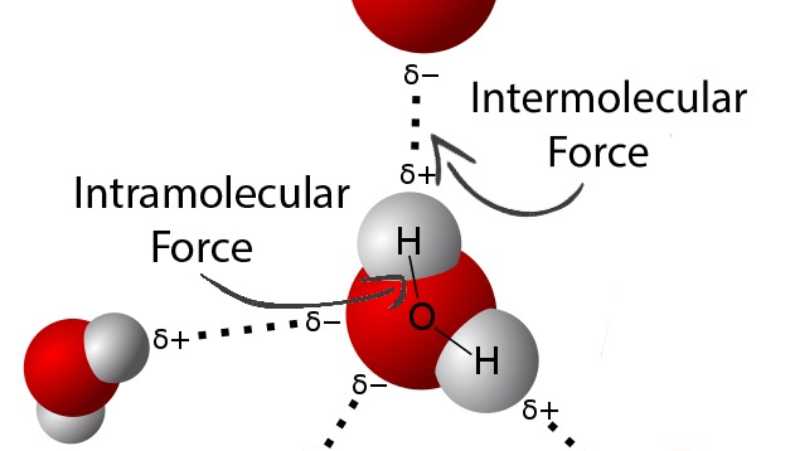
The inter-aetherspace handles chemical bonds while the intra-aetherspace handles atomic bonds.
A chemical bond is a force that holds two or more atoms together.
Atoms bond because they seek stability. An atom is most stable when its outermost electron shell is full (usually with 8 electrons, a rule called the octet rule).
If an atom has a nearly empty or nearly full shell, it will grab, share, or give away electrons to achieve that perfect state through its intra-aetherspace.
Why Do Bonds Matter?
Every property of a material comes from its bonds:
| Material | Bond Type | Why It Behaves That Way |
|---|---|---|
| Salt (NaCl) | Ionic | High melting point (strong lattice); brittle (ions shift and repel) |
| Diamond (C) | Covalent (network) | Hardest known natural material (all atoms locked in 3D grid) |
| Iron (Fe) | Metallic | Malleable (atoms slide without breaking); conducts electricity (free electrons) |
| Water (H₂O) | Covalent + Hydrogen bonding | Liquid at room temperature (H-bonds hold molecules together) |
| Wax | London dispersion | Soft, low melting point (weak forces between long carbon chains) |
The Big Picture
Chemical bonds are the language atoms use to build complexity. From the simple ionic grab of salt to the elegant electron sea of metals to the life-giving covalent chains of DNA, bonds transform the periodic table into the tangible world.
The next time you hold a metal spoon, sprinkle salt on food, or watch ice melt, remember: you are witnessing the silent, powerful choreography of atomic bonds.
In summary:
- Ionic = transfer electrons → crystals (salt)
- Covalent = share electrons → molecules (water, DNA)
- Metallic = pool electrons → metals (copper, iron)
- Intermolecular forces = gentle attractions between molecules (hydrogen bonding keeps water wet)
Leave a Comment
Thank you for your comment!
It will appear after review.