
Menu
Material Layer
- Material Layer
- SublayersSite AssistantPowered by GeminiHello! How can I help you with this page or topic?
- Media
- Media
- Gas ForcesSite AssistantPowered by GeminiHello! How can I help you with this page or topic?
- Liquid ForcesSite AssistantPowered by GeminiHello! How can I help you with this page or topic?
- Solid ForcesSite AssistantPowered by GeminiHello! How can I help you with this page or topic?
Site AssistantPowered by GeminiHello! How can I help you with this page or topic? - Substances
- SubstanceSite AssistantPowered by GeminiHello! How can I help you with this page or topic?
- AetherspaceSite AssistantPowered by GeminiHello! How can I help you with this page or topic?
- AetherspaceSite AssistantPowered by GeminiHello! How can I help you with this page or topic?
- DimensionalSite AssistantPowered by GeminiHello! How can I help you with this page or topic?
Site AssistantPowered by GeminiHello! How can I help you with this page or topic? - Substance
- Quanta
- The Table of Elements
- NonmetalsSite AssistantPowered by GeminiHello! How can I help you with this page or topic?
- SemimetalsSite AssistantPowered by GeminiHello! How can I help you with this page or topic?
- Metals
- Metals
- Lithium
- Beryllium
- Sodium
- Magnesium
- Aluminum
- Potassium 19
- Calcium 20
- Scandium 21
- Titanium 22
- Vanadium v023
- Chromium 24
- Manganese 25
- Iron 26
- Cobalt 27
- Nickel 28
- Copper
- Zinc
- Gallium 31
- Germanium
- Arsenic
- Rubidium
- Strontium
- Yttrium
- Zirconium
- Niobium
- Molybdenum
- Technetium
- Palladium
- Silver
- Cadmium
- Indium
- Tin
- Cesium
- Barium
- Lanthanum
- Gold
- Mercury
Site AssistantPowered by GeminiHello! How can I help you with this page or topic?
Site AssistantPowered by GeminiHello! How can I help you with this page or topic? - Conservation
- ConservationSite AssistantPowered by GeminiHello! How can I help you with this page or topic?
- ConstantsSite AssistantPowered by GeminiHello! How can I help you with this page or topic?
- PolaritiesSite AssistantPowered by GeminiHello! How can I help you with this page or topic?
Site AssistantPowered by GeminiHello! How can I help you with this page or topic? - Conservation
- Actions
- The Actions of the Material Layer
- IdentitySite AssistantPowered by GeminiHello! How can I help you with this page or topic?
- SoliditySite AssistantPowered by GeminiHello! How can I help you with this page or topic?
- StabilitySite AssistantPowered by GeminiHello! How can I help you with this page or topic?
Site AssistantPowered by GeminiHello! How can I help you with this page or topic? - Relationalities
- Material Relationalities
- GasSite AssistantPowered by GeminiHello! How can I help you with this page or topic?
- RelationalitiesSite AssistantPowered by GeminiHello! How can I help you with this page or topic?
- SolidSite AssistantPowered by GeminiHello! How can I help you with this page or topic?
Site AssistantPowered by GeminiHello! How can I help you with this page or topic? - TechnologiesSite AssistantPowered by GeminiHello! How can I help you with this page or topic?
Newton’s G is the ratio of aetherspace (atomic space) to aether (empty space).
F = G (m₁m₂)/r² is the force exerted by the aether onto masses of atoms, or by empty space onto atomic space.
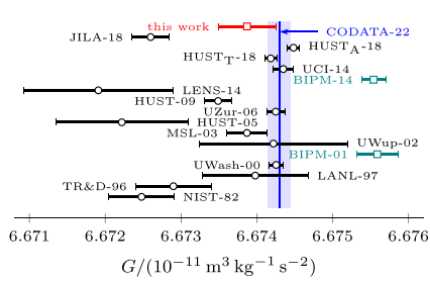
The Inconstancy of Newton’s G
Newton’s gravitational constant G is not constant because the microaetherspace (atomic space):
- expands and contracts
- is always in flux
This proves a dynamic and subjective universe.
Leave a Comment
Thank you for your comment!
It will appear after review.