Menu
Table of Contents
Planck’s Constant: Timespace-Aetherspace Ratio
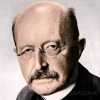
Max Planck wrote about Planck’s constant ( ) in his work “Energy Distribution Law.”
This was later refined by Paul Dirac as -bar ( ) to properly account for rotational cycles and was called an abstract “quantum of action.”
However, Material Superphsyics calls it as discrete physical time units.
In the Physics of René Descartes, time is not a smooth, continuous fabric, but is instead composed of independent, sequential moments.
- This leads to spacetime slices that are independent of each other that are glued together by the perceiving mind.
The Missing Ingredient for Unification
We integrate Planck’s Constant with Newtonian Matter (as displacement) and Maxwell’s Electromagnetism (as vortex rotation) in order to create a more comprehensive theory of gravity and fluid dynamics.
- Planck’s Rotational Quantum ( ): Representing the fundamental cycle of physical time.
- Maxwell’s Curl: Representing the literal vortex dynamics of a fluid, underlying aether.
- Newton’s Gravitational Principles: This is the displacement, flowing ability of the aether which he wrote as “Spirit of God” in the General Scholium
This reverses the relativity fallacy by Einstein.
Leave a Comment
Thank you for your comment!
It will appear after review.