
Menu
Table of Contents
In 1835 in the paper On the Equations of Relative Motion of Systems of Bodies, Gaspard-Gustave de Coriolis revealed the hidden forces that appear when analyzing motion from within a moving (especially rotating) perspective.
The Coriolis force is really composite centrifugal forces that is based on the 2nd Rule of Motion.
The Two Supplementary Forces
Coriolis showed that to correctly write the equations of motion in a rotating or arbitrarily moving coordinate system, one must add two kinds of supplementary forces to the real forces acting on the bodies:
- Binding forces (opposed to those that would keep points fixed to the moving planes)
This represents displacement from the 1st Rule of motion. In Physics, this is the centrifugal and Euler forces that arise from the acceleration of the ‘frame’ itself.
- Composite centrifugal forces
These are the true Coriolis terms, arising from the 2nd Rule of Motion, creating cohesion.
These are directed perpendicular to both the relative speed of the body and the axis of rotation.
Their magnitude is twice the product of the angular velocity of the frame and the component of the relative motion perpendicular to the rotation axis.
This is what we add to Newton’s Universal Law to make it ‘relational’ and replace Einstein’s Relativity.
A Vortex Within a Vortex
The moving ‘frame’ of the vortex system shows an underlying vortex. It is therefore a vortex within a vortex.
For example:
- a typhoon is an atmospheric vortex that is within the spinning vortex of the Earth
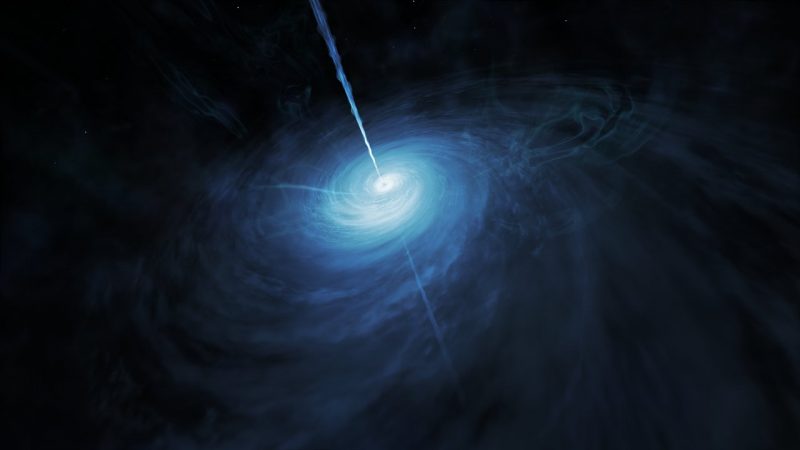
- a galaxy is an galactic vortex that is within the vortex of the universe, as the aethereal identity space
This relative motion itself generates a smaller vortex — a local disturbance or secondary circulation within the primary aether flow. The interaction between these two opposing or compounding flows (the primary vortex of the frame and the secondary vortex of the relative motion) produces a resultant cross force.
This is why the Coriolis force: a vortex within a vortex effect.
Vortices are the Swirl of Infinite Lines
When an object (like an air mass or a projectile) moves across a rotating surface, it is being buffeted by space particles which travel in straight lines.
The object “wants” to travel in a straight line, but the high space pressure of the aetheric environment pushes it toward the lower-pressure path.
Because a circle is the geometric shape that contains the maximum number of potential straight-line vectors in a closed loop, the space particles naturally force the moving object into a “swirl” as a vortex.
And so an object’s vortex is actually the aetheric medium correcting the object’s path to match the vortex of the system that it is in.
The Coriolis force creates the “swirl” of our atmosphere and oceans, caused by space particles.
Leave a Comment
Thank you for your comment!
It will appear after review.