
Menu
Table of Contents
Anti Clockwise Vortices: Stars
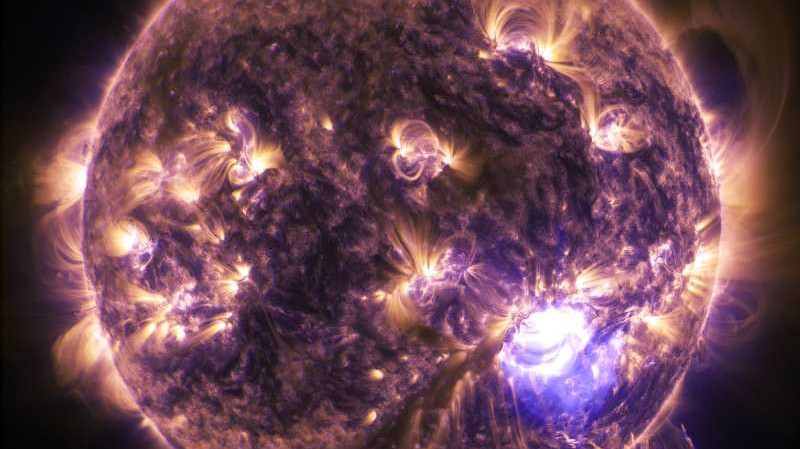
Stars are anticlockewise stellar vortices, while pulsars are clockwise vortices.
Examples of Bright Anticlockwise Vortices:
- Sirius (Alpha Canis Majoris): The brightest star in Earth’s night sky. Its anticlockwise spin creates a stable, brilliant white vortex just 8.6 light-years away.
- Canopus (Alpha Carinae): The second-brightest star. A supergiant anticlockwise vortex so vast it would engulf the orbit of Earth if placed in our solar system.
- Rigel (Beta Orionis): The luminous blue-white vortex in Orion’s foot. Its anticlockwise spin is ferocious, driving intense stellar winds.
These anticlockwise vortices live long, stable lives, shining for millions or billions of years.
Clockwise Vortices: Pulsars
The pulsars get their energy to flip by the extra strong gravity that collapses them. This is really a sign of the weakness of its timespace (center).
Examples of Clockwise Pulsar Vortices:
- The Crab Pulsar (PSR B0531+21): The most famous example. Born in a supernova witnessed in 1054 AD, it spins 30 times per second clockwise, driving a visible nebula of energetic particles.
- The Vela Pulsar (PSR J0835-4510): One of the brightest radio pulsars. Its clockwise rotation is so rapid (11 Hz) that it creates a powerful, jet-like vortex structure.
- PSR J0437-4715: The brightest millisecond pulsar. Spinning over 170 times per second, its clockwise vortex is nearly perfectly stable, used by astronomers as a celestial clock.
Leave a Comment
Thank you for your comment!
It will appear after review.