

Menu
Table of Contents
The Gross National Happiness (GNH) Index has been in part of the Constitution of Bhutan since July 18, 2008.
It is made up of 4 pillars:
- Sustainable and Equitable Socioeconomic Development
- Environmental Conservation
- Culture
- Good Governance
It also has 9 domains which we arrange into our hierarchy:
- Living Standards
- Ecological Resilience
- Mental health
- Education
- Health
- Community
- Time Use
- Culture
- Governance
It is administered by a Gross National Happiness Index Commission that is tasked to:
- come up with 5-year plans
- administer the GNH survey
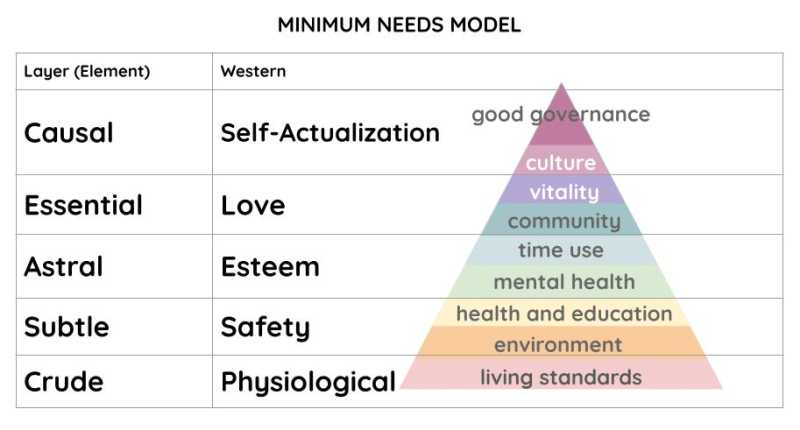
After food, clothing and lodging are the two great wants of mankind.

The economic authority of a country, such as the Bureau of Economic Research in the US can be overhauled to implement the GNH in their respective countries.
The Net Domestic Product will be absorbed by the Living Standards Domain or the Material Strata.
Needs Policies
The Needs Policies refer to laws and regulations that directly affect the Minimum Needs:
- Agriculture and Water
- Transportation and Infrastructure
- Energy and Telecoms
- Healthcare and Insurance
- Pension
These will be discussed in their own subchapters.
Leave a Comment
Thank you for your comment!
It will appear after review.