The 10 Spiritual Virtues

Chapter 2

The 10 Spiritual Virtues

The 10 virtues are based on Yama and Niyama

3 min read
zh
Table of Contents

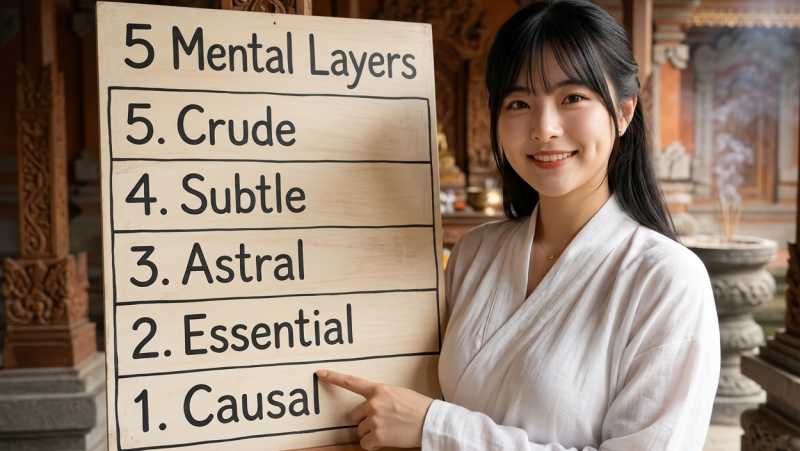
The 5 Layers of Superphysics lead to the 10 Virtues.

Layer Positive Action Negative Action
Material Cleanliness Nonviolence
Convertible Contentment See all as the Supreme
Radiant Taking the suffering of others Focus on Needs
Spatial Self-Study Non-stealing
Aethereal Ideation of the Supreme Do Not Bear Falsehood

Selfishness

In my previous articles, I explained that the cause of most of the world’s problems, whether global warming, war, or inflation, is human selfishness.

Selfishness seemed to grow in Europe during their Mercantile period when the Europeans became wealthy through a direct trade with China, India, and Indonesia.

This prompted Rousseau to write about inqeuality in the 18th century:

“The more our capital cities become admirable, the more abandoned is the countryside, the more the roads crowd with beggars or highwaymen. Thus the State grows rich on the one hand, and feeble and depopulated on the other. The mightiest monarchies, after having taken immense pains to enrich and depopulate themselves, fall at last a prey to some poor nation which invades it. Then growing opulent and weak in its turn, that nation is itself invaded and ruined by some other.” – Rousseau, The Origin Of Inequality Among Men

Instead of fighting the selfishness that created inequality, the 20th century actually made it permanent by building the science of Economics around it:

“Smith proclaimed the principle of the ‘invisible hand’. It says that every individual, in selfishly pursuing only his or her personal good, is led, as if by an invisible hand, to achieve the best good for all. In this best of all possible worlds, any interference with free competition is certain to be injurious.

“John D. Rockefeller’s dog may receive the milk that a poor child needs to avoid rickets. Why? Because supply and demand are working badly? No. Because they are doing what they are designed to do, putting goods in the hands of those who can pay the most.” - Samuelson, Economics

The selfishness that Rousseau wrote about still continues to this day in our current economic system.

Adam Smith did write about the virtue of self-interest. But it really meant the virtue of taking care of oneself.

“Regard to our own self-interest is often a very laudable motive.. The motive of self-preservation prompts anyone to take care of one’s health, life, or wealth. We disapporve of carelessness and poverty because it shows a lack of attention to the self. - Theory of Moral Sentiments

So Samuelson and other selfish writers exploited the ambiguity of the word “self-interest” which could mean “caring for oneself” in a positive way as used by Smith, and “being selfish” in a negative way as used by economists.

To fix this corruption, we propose a new science called Supereconomics which is totally NOT based on selfishness.

This will gradually reduce the selfish mentality imposed by around 150 years of Economics and replace it with the reciprocity mentality that existed before the Mercantile period.

Leave a Comment