

Menu
Unit 1 explained that the root idea behind morality is happiness which is a positive wave from which other positive waves, such as virtues, come about.
In Western utilitarian ethics, John Stuart Mill’s Greatest Happiness Principle advocated a principle of happiness similar to Epicurus and Benhtam:
The Greatest Happiness Principle says that actions which promote happiness are moral, actions which produce the reverse of happiness are immoral.

Mill defines happiness primarily as the presence of pleasure and the absence of pain.
However, from the perspective of Superphysics and Asian spirituality, this principle is flawed because it focuses on the “agitation” from pleasure rather than the “equilibrium” of peace.
How is Superphysics Morals Different The Greatest Happiness Principle?
The two main differences between Superphysics Morals and such Utilitarian Morals is that the latter is:
- based on pleasure from shallow sensory perceptions, usually from the material layer
- based on such pleasure as a short-term effect or instance of pleasure
Superphysics Morals, on the other hand, is based on the higher pleasures, specifically from the spatial (mental) and aethereal layers (spiritual). It is also ’emergent’, meaning that it is based on the spatial layer or space and time which always changes.
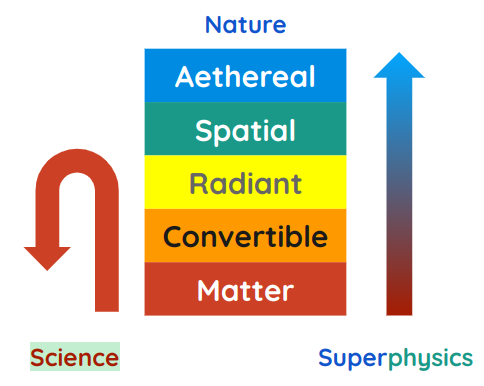
The spatial layer is why Superphysics morals:
- is not fixed
- focuses on maximum people and maximum length of time.
Leave a Comment
Thank you for your comment!
It will appear after review.