
Table of Contents
Donald Trump recently lowered tariffs against China from 57% to 47% and canceled his additional 100% tariff threat.
The 10% reduction comes from halving the original fentanyl tariff of 20%, which was announced on March 3.
In return, Xi Jinping promised to:
- reduce the exports of raw materials for fentanyl
- cancel the prohibition of rare earth exports
- buy at least 25 million metric tons of soybeans annually for next 3 years. However, this is less than half of what China used to import
Protectionist Libertarianism
The pattern of the policies of Trump in his 1st and 2nd term are consistent with libertarianism and with protectionism, the latter being a component of conservatism
Libertarianism aims to reduce both domestic taxation and government services in order to spur private enterprise. This favors the business class (Người buôn bán 商 in Vietnamese) leading to oligarchies, and is consistent with the U.S. government shutdown.
Conservatism seeks to strengthen the power of government. This favors the warrior class (Tầng lớp chiến binh), leading to monarchies.
Thus, we can say that Protectionist Libertarianism is America’s defensive response to the aggressive Conservative Socialism of China under Xi Jinping.
Socialism represents the dominance of the working class (Nông dân 农) under a strong leader.
The high priority that Trump placed on rare earths demonstrates his support for the U.S. AI industry. In fact, economists note that much of the 3.8% GDP growth in the second quarter of 2025 came from tech-related activity, particularly data center expansion for AI use.
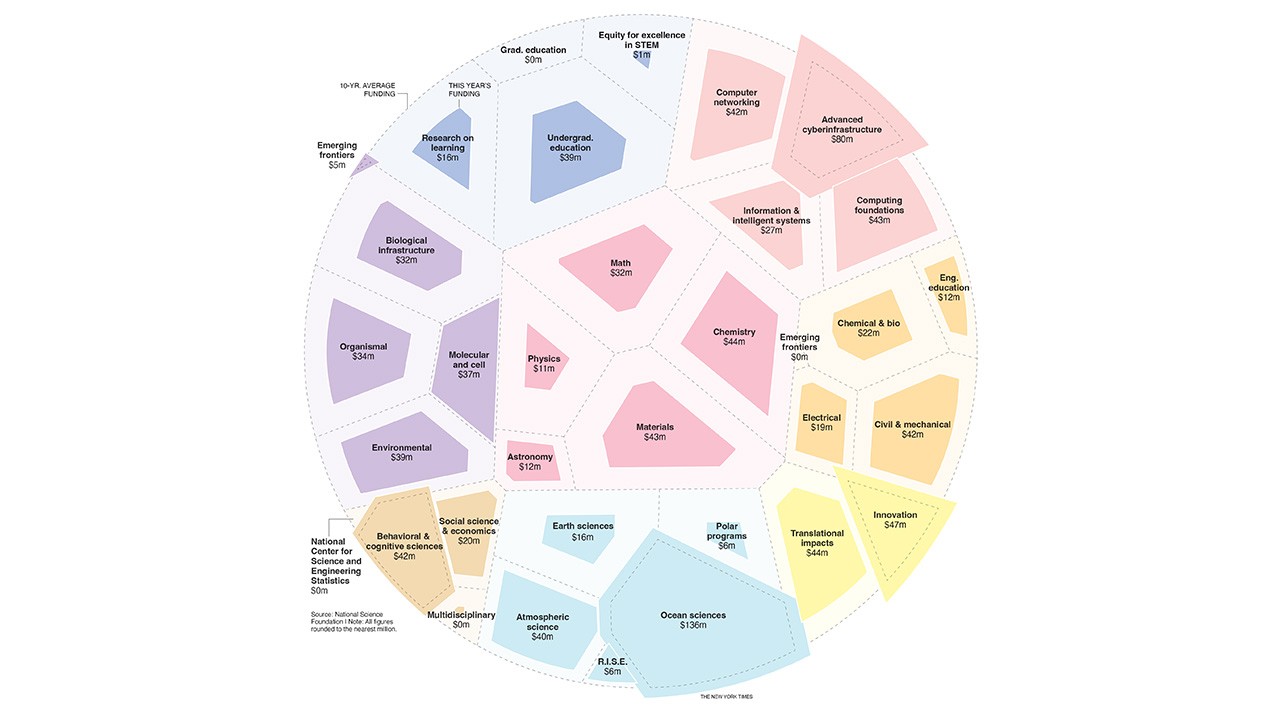
The graphic above shows that Trump has increased government spending on data centers and seafloor mapping for oil (consistent with the renaming of the region as the “Gulf of America”), while reducing spending elsewhere.
His neglect of U.S. soybean farmers and cattle ranchers reveals that his strategy resembles the mercantile system of Colbert.
The Mercantile System of Colbert
The core idea of mercantilism is the balance of trade — a trade surplus is good, and a trade deficit is bad. It turns a nation into a shop or a business, as explained by Adam Smith:
Creating a great empire of customers is only good for a nation of whose government is influenced by shopkeepers.
 A
A
A mercantilist government typically adopts the following policies:
- Focus on selling high value goods like manufactured products, while reducing the sale of raw materials which it will process domestically. In the US, this is consistent with the decline in raw materials exports in June.
- Focus on cash crops while reducing food crops. In the US, this is consistent with the importation of beef from Argentina.
- Reduce taxes on manufacturing and their owners, while reducing government services to the masses. In the US, this is consistent with the One Big Beautiful Bill Act keeping corporate taxes low, while defunding of healthcare and education.
The Effect: Great Inequality
These policies were implemented by Jean-Baptiste Colbert who was the Prime Minister of France between 1661 and 1683, creating a state-run French mercantile system which was highly effective at generating wealth.
This enabled Louis XIV to build palaces and wage wars. However, this also created great inequality as seen in the lavish lifestyle of the French monarchy.
In the current U.S. context, this prosperity is reflected in three out of four economic indicators:
- A decline in the US budget deficit
- An increase in GDP, which was 3.8% in Q2 2025
- A rise in its stock market
- The trade deficit continues to widen as the U.S. imports materials for its factories and data centers
These gains are offset by inflation and stagnant job growth, as jobs are being lost to AI automation, evidenced by layoffs in the tech industry. This remains consistent with my earlier article predicting stagflation for Main Street.

In the end, the state mercantile system established by Colbert led to the French Revolution, which replaced monarchy with representative government.
In the modern world order—where the U.S. acts as the global monarch—the inequality created by a tech monarchy will likely lead to an alternative system of global representation, possibly through a world government.
Leave a Comment
Thank you for your comment!
It will appear after review.