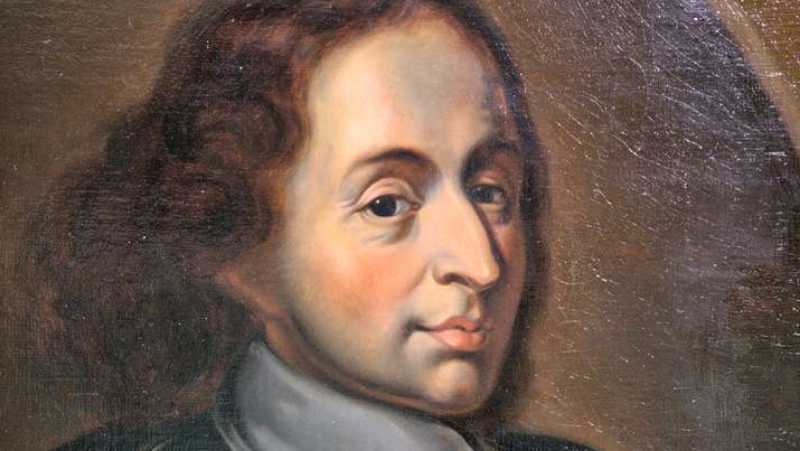

Blaise Pascal, the 17th-century French mathematician and philosopher, faced a difficult problem in his work Pensees: he was pushing for people to believe in the Biblical God during the onslaught of science from Galileo and Descartes.
Instead of offering evidence or specific practices to realize God (as is done in Asian spirituality), he proposed a famous gamble known as Pascal’s Wager.
He says to believe in God anyway.
- If God exists, you gain the infinite, eternal heaven.
- If God does not exist, you lose nothing — or at most, a bit of time spent on prayers and rituals.
Therefore, the rational choice is to believe.
Let us weigh the gain and the loss in wagering that God is. Let us estimate these two chances.
If you gain, you gain all; if you lose, you lose nothing. Wager, then, without hesitation that He is.

The Hidden Fallacy
The wager sounds clever on the surface, but it collapses in practice.
Many people have taken the bet. They tried believing, attended church or mosque, prayed sincerely, and waited.
When they experienced no real transformation, no answered prayers, and no deep inner shift, disillusionment set in.
Instead of “nothing to lose,” they often lost trust in religion entirely.
Some became staunch atheists and even anti-religious. The wager did not leave them neutral — it left them more cynical than if they had never wagered at all.
This is the core fallacy: Pascal assumed that failed belief costs nothing.
In reality, insincere or wager-based belief often produces spiritual disappointment, which then hardens into rejection. The downside is real.
Spirituality Is Not a Bet
Genuine spirituality does not arise from calculated risk. People turn to spiritual paths out of deep necessity — to end suffering, to understand their existence, to satisfy an inner longing that material life cannot fulfill.
Spirituality is a natural flow, not a product to be sold through clever marketing or probabilistic arguments.
It works through direct inner effort, self-knowledge, and alignment with reality — not through pretending to believe in hopes of a cosmic jackpot.
This aligns with the principle that different paths attract different people. There is no single path for everyone.
This is why Spiritual Superphysics suggests 4 natural paths based on the 4 natural properties of waves:
- Karma Yoga or action-based: This is done by service as espoused by Christianity (e.g. Red Cross) and the Sassani (The Formula)
- Bhakti Yoga or love-based: This is done love as seen in Hinduism as blind stupid love (e.g. chanting and dancing loudly like Ramakrishna)
- Jnana Yoga or intellect-based: This is done by intellectuals as seen in Buddhism which analyzes everything, especially Zen
- Raja Yoga or discipline-based: This is rigid as seen in Islam which has many rules
You do not gamble on spirituality just as you do not gamble that your crush will love you, or that your child will succeed in life if you analyze mathematical probabilities. Instead, you just feel how things flow.
In the end, the wisest approach is not to bet on God, but to honestly explore your own qualities and find which path FEELS best.
Leave a Comment
Thank you for your comment!
It will appear after review.