Table of Contents
History of Fascism
Fascism is a far-right, authoritarian political ideology that emerged in the early 20th century, characterized by dictatorial power, extreme nationalism, suppression of dissent, and often militarism. Its origins can be traced to the post-World War I era, particularly in Italy.
-
Origins (1919–1922):
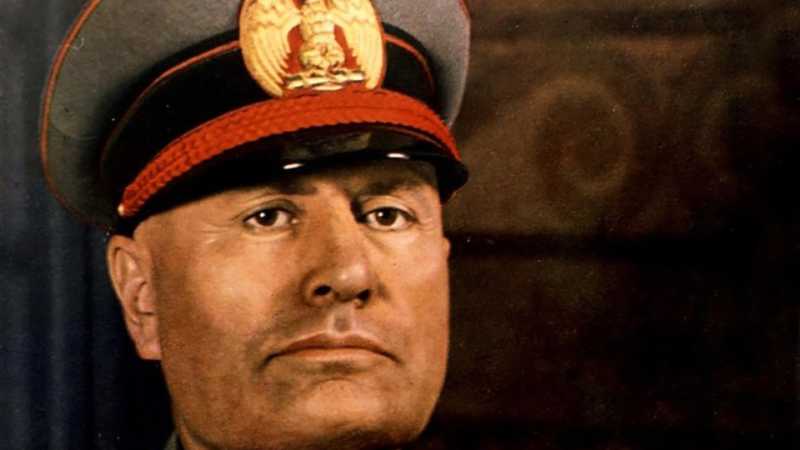
- Italy: Benito Mussolini founded the Fascist Party in 1919, capitalizing on economic instability, social unrest, and nationalist resentment after World War I. By 1922, Mussolini seized power in the March on Rome, establishing the first fascist regime.
-
Expansion (1920s–1930s):
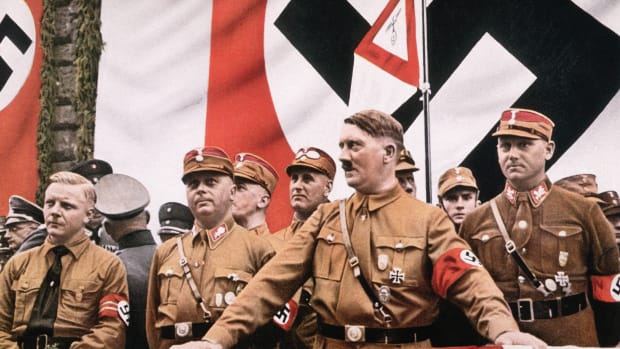
- Germany: Adolf Hitler adapted fascist principles into Nazism, which emphasized racial purity alongside authoritarian control. After becoming Chancellor in 1933, Hitler transformed Germany into a totalitarian state.
- Other Countries: Variations of fascism appeared in Spain under Franco, Portugal under Salazar, and several Eastern European nations.
-
World War II and Decline (1939–1945):
- Fascist powers, notably Germany, Italy, and Japan, formed the Axis alliance, leading to World War II. The defeat of the Axis powers marked the collapse of most fascist regimes.
-
Post-War Influence:
- Although discredited after WWII, neo-fascist movements and far-right extremism have persisted in various forms globally, often rebranded under different nationalist ideologies.
Key Characteristics of Fascism:
- Authoritarian Leadership: A single leader with absolute power (e.g., Mussolini, Hitler).
- Nationalism: Glorification of the nation-state, often tied to ethnic or cultural superiority.
- Militarism: Emphasis on military strength and expansion.
- Suppression of Dissent: Control of media, censorship, and use of state terror.
- Anti-Democratic: Rejection of democratic processes, political pluralism, and liberal values.
- State Control: Economic control through corporatism (collaboration between state and major industries).
Difference Between Fascism, Feudalism, and Monarchy
| Aspect | Fascism | Feudalism | Monarchy |
|---|---|---|---|
| Time Period | 20th century onward | Medieval period (9th–15th century) | Ancient to modern times |
| Political System | Totalitarian dictatorship | Decentralized hierarchical system | Centralized under a king/queen |
| Power Source | Dictator and ruling party | Land ownership and vassalage | Hereditary rule, divine right, or constitution |
| Society Focus | National unity, militarism | Loyalty to lords, agrarian economy | Loyalty to monarch; can vary from absolute to constitutional monarchy |
| Economy | State-controlled corporatism | Manorial economy (self-sufficient estates) | Varies: feudal, mercantile, capitalist |
| Rights & Freedoms | Suppressed under authoritarian rule | Determined by feudal contracts | Depends on monarchy type (absolute vs. constitutional) |
| Role of Violence | State-sponsored, militaristic | Feudal warfare between lords | Varied: can be militaristic or peaceful |
| Examples | Nazi Germany, Fascist Italy | Medieval Europe, Japan (samurai era) | British monarchy, French monarchy (pre-revolution) |
Key Differences:
- Fascism is a modern, ideologically-driven system centered around nationalism and authoritarianism.
- Feudalism is a medieval socio-economic structure based on land ownership and reciprocal obligations between lords and vassals.
- Monarchy is a system of governance where a monarch (king/queen) rules, which can coexist with democratic elements (constitutional monarchy) or be absolute.
Section 1
Warrior Philosophies
Chapter 10
What is Feudalism?
Leave a Comment
Thank you for your comment!
It will appear after review.