Table of Contents
Chapter 1 explained the concept of Svadharma which is being aligned to one’s own dharma.
We define dharma as the inherent, metaphysical nature of any discrete identity with reference to the creator of that identity.
For example, the nature of a basketball is very different from that of a smartphone.
- You can throw a ball around
- But you have to take care of your phone

If you treat your phone like a basketball then it will break. Likewise, if you are so careful with a basketball, then it becomes useless.
The breaking and uselessness are bad karma arising from not keeping with their dharma.
Economic Karma
Likewise, an economy has a dharma or true nature just like everything else.
This dharma is to provide for the physical well being of everyone through effort and work, including plants and animals.
The 4 Laws then help keep up that dharma. Violation of those Laws, as adharma, will lead to economic crises and problems.
Both dharma and the discovery of those laws are an effect of the Positive Force, as Yang in Taoism or Shiva in Hinduism.
Violations of dharma and of those laws are caused by the Negative Force, as Yin in Taoism or Shakti in Hinduism. This pushes identities towards selfishness and matter, just as the Positive Force pushes towards selflessness and spirit.
An example of a Negative push is from the mind of John Stuart Mill who equated happiness to physical or material pleasure.
The doctrine that the basis of morals is utility, or the greatest happiness principle, holds that actions are right in proportion as they tend to promote happiness, wrong in proportion as they tend to produce the reverse of happiness.
By ‘happiness’ is meant pleasure and the absence of pain; by ‘unhappiness’ is meant pain and the lack of pleasure.
 J
J
This materialism is mirrored by Marx who made the Positive (spirit) subservient to the Negative (matter):
Man’s consciousness changes with every change in the conditions of his material existence. The history of ideas prove that intellectual production changes its character in proportion as material production is changed.
The first step in the revolution is to make the proletariat the ruling class. They will then wrest all capital from the capitalists and centralise all production
 K
K
This is why both Laissez-Faire Capitalism and Communism are unsustainable.
- Capitalism only creates physical well-being for the rich
- Communism only creates physical well-being for the ruling class
Both schools of thought wanted physical well-being. But they only knew physics and not metaphysics which is the cause of everything in the physical domain.
They dealt with effects without addressing the root cause of their economic problems. This then led to new problems. The more radical their solution the more radical the problem became, as a natural karma.
This makes the policy fall short of its goals or even makes the problem worse.
Smith on Economic Karma
Since karma is universal and timeless, it works the same way regardless of time and location, whether in the distant past, distant future, or in a very distant place. Selfish actions always and everywhere bring about something hurtful, or opposite of what was intended, in the long-run or even short-run:
At first sight, the monopoly of the great commerce of America seemed to have the highest value. The dazzling splendour of the object, however, is the very quality which renders the monopoly of it hurtful..
 A
A
The regulations of each nation to secure the exclusive trade of its own colonies are frequently more hurtful to those colonies than beneficial.
A
The unjust oppression of the industry of other countries falls back on the heads of the oppressors. It crushes their industry more than it does that of those other countries.
The country’s industry is turned away from an advantageous employment [because of the monopoly of the home market]. The value of its produce is reduced by such regulations instead of being increased according to the intention of the lawmaker
A
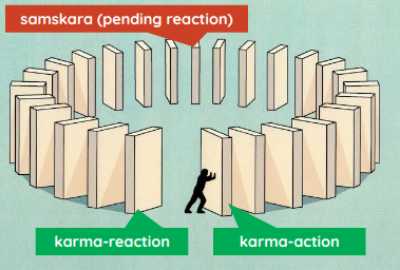
History is full of examples of narrow-minded economic policies going back to hurt the intended beneficiaries or producing opposite effects:
| Bad Policy | Karma |
|---|---|
| US Tariffs in the 1930’s were meant to protect US industries | They contributed to the Great Depression that destroyed them |
| 1990’s Credit derivatives were created to increase the wealth of investment banks | They caused their bankruptcy through the Great Recession |
| The Greek government borrowed massively for the Athens Olympics to make their country richer | It led to the Greek debt crisis |
| Trump reduced environmental rules to make the US wealthier in 2017 | Nature fought back with Covid in 2020 which locked down the US |
Luck vs Karma
Leave a Comment
Thank you for your comment!
It will appear after review.