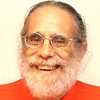
Until 1954, Baba led a life of spiritual camouflage.
He initiated a large number of people without letting one another know that they were His disciples.
Most of His co-workers and even His family did not know about His spiritual work.
On November 7, 1954, He called His disciples together for the first time and delivered His first spiritual address.
On January 9, 1955, Ananda Marga Pracaraka Samgha was formally founded.
He explained that the organization aimed at a two-fold ideal:
- Liberation of self
- Service to the world
Then, for the first time in a collective meeting, Baba gave His now-famous special gesture of blessing. Everyone in the congregation entered into various states of spiritual awakening.
In the late 1950’s Baba married. A few years later, a baby boy was born.
- Thus, Baba demonstrated that a family was no impediment to a life of supreme dedication.
From 1955, Baba began training spiritual teaches or acharyas and empowering them to teach the meditation lessons.
In the first years, all of these men and women were well-educated, respected family people.
- They eventually numbered several hundred.
In these first years of Ananda Marga, Baba also wrote much of the basic spiritual and social philosophy.
He saturated His disciples in blissful experiences and gave almost no guidance regarding any social work except for the propagation of spiritual and yoga practices.
Baba frequently demonstrated extraordinary psycho-spiritual phenomena. He:
- induced different states of superconsciousness in His disciples
- caused individuals to die and then brought them back to life
- created special circumstances in which they would hear the divine sounds.
This purely spiritual phase ended in 1962 when Baba began the order of monks and nuns.
The speed of Ananda Marga’s growth accelerated greatly, and began to spread throughout India.
Though His demonstrations continued, Baba now began organizing massive social service programs.
In 1963, the Education, Relief and Welfare Section was started.
Workers and Margis (members of Ananda Marga) threw themselves into opening schools and welfare homes, and into catastrophe relief work.
Yet it was only at the end of 1966, when the organization had grown to immense proportions, that Baba agreed to give up His job at the railway office.
By maintaining His employment throughout the foundation years of the organization, he demonstrated that busy family people are capable of both spiritual achievement and service to society.
He accepted His workers’ request to give up His job only when they promised to keep up with His speed. He told them their activities would increase ten times.
Baba moved to Ananda Nagar, our global master unit, located in an impoverished tribal area. The organization’s speed became something unimaginable.
Throughout the same period, the public was exposed to Baba’s socio¬economic concept called Progressive Utilization Theory (or Prout), which He had first given in 1959.
Because of Prout’s intrinsic threat to vested interests, opposition to Ananda Marga developed among corrupt politicians and other shady public figures.
That opposition began expressing itself in a sinister way in 1967 when an attack was organized against Ananda Nagar by members of the Communist Party (Marxist). Five monks were murdered.
Several politicians and hoodlums were eventually arrested and convicted for the murders.
Other serious incidents occurred over the following years, including one more murder by the Communists in 1969. 2
The Communists were, even then, a major political force in India.
Today they hold the power in West Bengal state where Ananda Nagar and Calcutta are both located.
- Our central office is in Calcutta.
By that time, Ananda Marga’s influence had grown considerably. Half the police commissioners of Bihar state were Margis as well as many other public officials.
Margis gained a reputation as scrupulously honest people who refused to accept bribes or in any way compromise their morality.
Baba had always spoken out against all forms of corruption.
Margis in public positions began exposing the corruption rampant in the administration at that time.
In 1969, in light of these developments, the federal government passed a ban order, forbidding civil servants and other government employees from joining Ananda Marga.
The order claimed that Ananda Marga was actually a political organization.
Ananda Marga then filed a challenge in the Supreme Court and won the case, causing the ban to be withdrawn.
Desperate to stop Ananda Marga. the government, in complicity with the Central Bureau of Investigation (CBI), resorted to drastic measures.
They concocted murder conspiracy charges against Baba, and He was arrested in December 1971.
The victims’ bodies were mutilated and unidentifiable.
Though there was no solid evidence, the case dragged on for nearly 7 years, while Baba tolerated difficult jail conditions.
In 1973, when it appeared we might soon win the case, Baba suffered an attempt to kill Him by poison.
He lost His eyesight and underwent intense pain for many days. When the government refused to investigate the poisoning.
Baba began a protest fast consuming liquids only — which He continued for more than 5 years.
He stopped the fast when He was proven innocent, honorably acquitted and released from jail in August 1978.
During the time of His fasting, several Members of Parliament came to visit Baba.
This was one of the few known times when He permitted non-Margis to meet and talk to Him.
Normally, it was always His policy to remain inaccessible to the general public.
The visiting officials begged Baba to break His fast, arguing that His life was vital for the success of His mission.
But Baba replied, “My ideas are more precious than my life.”
On the other hand, when He was later asked how it was possible that He sustained His body despite prolonged fasting.
He answered, “There is nothing unnatural about it. The only difference is that while other people take energy assimilated in their edibles, I have to derive energy directly from sunlight.”
Before Baba was imprisoned, Ananda Marga was active in only 5 countries.
By the time He came out, it had spread to 80, and had become the world’s largest traditional yoga movement.
As Tantric principles would suggest, the struggles undergone by the workers and Margis had only helped in strengthening them.
Such difficulties, however, were far from finished. On May 1st, 1982, 17 Dadas and Didis were killed in a barbarous manner by the Communists in Calcutta.
Later, Dada Ajitananda was beaten to death in Siliguri jail because he refused to support a false case filed by the Communists.
In 1981, Baba conducted an extraordinary three-month program in which He used His subtle perception to analyze the conduct and health of thousands of Margis, one by one.
It was a unique activity never before done by any spiritual master. This was the only time in Baba’s life that He clearly exposed His occult power to such a large number of people over many days continuously.
From 1985 a massive development program of Ananda Nagar was undertaken.
More than 100 small and large buildings were constructed, farms were started, various development training programs for the neighboring villagers were begun, ecological energy systems were established, women’s welfare activities were undertaken, agricultural research stations were created, and the network of roads and rivers was greatly expanded.
A hospital was built, which now serves hundreds of people every week.
The kindergarten, primary school, high school and university have a total enrollment of over one thousand students, many of whom live in hostels and children’s homes.
There is a bakery and several different kinds of small industries.
The Communists, intimidated by such progressive activities in the center of a belt of poor, illiterate tribal people, began striking directly at Ananda Nagar.
Almost every day thugs attempted to destroy buildings or crops, or to attack our workers. Ananda Marga’s leading agricultural scientist, Dada Asiimananda, was murdered along with 4 other workers.
Later, one worker was killed and 4 Margis severely injured when they were trying to protest police mistreatment of a number of overseas Margis.
All of these disturbances continued until October 21, 1990, the day that Baba left His physical body. After that the attacks greatly diminished.
Baba left behind a vast legacy. He wrote over 200 books on diverse subjects. An incomplete list of those subjects follows:
- spiritual philosophy and practice, yoga and Tantra
- psychic development
- the cycle of creation and reincarnation
- social philosophy, norms, ceremonies and systems
- Bengali dictionary of over 6000 difficult words, with derivations
- Bengali encyclopedia of over 6000 pages
- English, Sanskrit and Bengali grammar books
- language, script and philology
- microvita (most minuscule and mysterious life form)
- Neo-humanism (overcoming dogma, creating universalism by devotion) agriculture
- health habits and medical treatment
- economics
- education
- justice and women’s rights
- the judicial system and criminality
- culture, literature and fine arts
- industrial policy, cooperatives and commerce
- ecology, population growth and decentralization
- politics, government, democracy, communism and progressive socialism
- history and civilization: socially, economically, culturally and spiritually
- analysis of spiritual scriptures and mythological writings
- analysis of major religious schools and historically-related figures
- morality
- bio-psychology, glands and anatomy
- the social roles of the major professions
- animals
- short stories
- children’s stories
- dramas
In addition to these writings, Baba composed 5018 songs in 8 languages, collectively called Prabhat Sangiit. The songs were written during the last 8 years of His life.
I see that until now that my purpose in being on the spiritual path—to realize Truth or God—has really been for the sake of myself.
- It has been selfish.
Kiirtan is a way out of that selfishness.
It’s a dance of surrender to God, a dance of giving Him myself. Singing of Him, dancing for Him— nothing for me.
During my first kiirtans, I was sometimes self-conscious. I thought: “Am I doing it right? What will others think of me doing this dance?”
But soon I overcame that, and, after I sat for meditation, the flow continued: for Him, not for me.
A big burden is being released, a burden I didn’t even know I carried.
Whenever I do kiirtan nicely, selfish thinking stops or almost stops. But not by suppression. Where “He” is, automatically my “I” is not.
Who or what is He? I don’t know. Occasionally during kiirtan or meditation I get scared I’m losing myself to something unknown and I draw back.
How silly! There’s nothing to lose except my selfishness.
Leave a Comment
Thank you for your comment!
It will appear after review.