Table of Contents
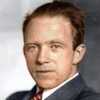
A winner of the Nobel Prize, Werner Heisenberg was born in 1901 in Wurzberg, Germany. He studied physics at the University of Munich and for his Ph.D. wrote a dissertation on turbulence in fluid streams. Interested in Niels Bohr’s account of the planetary atom, Heisenberg studied under Max Born at the University of Gottingen and then, in 1924, went to the Universitets Institut for Teoretisk Fysik in Copenhagen, where he studied under Bohr. In 1925 he published a paper, `About the Quantum-theoretical Reinterpretation of Kinetic and Mechanical Relationships’, in which he proposed a reinterpretation of the basic concepts of mechanics, and this was followed by the publication of his indeterminacy principle in 1927. In that year he became professor at the University of Leipzig and held the post until 1941, when he was appointed director of the Kaiser Wilhelm Institute for Physics in Berlin. After the war he organized and became director of the Max Planck Institute for Physics and Astrophysics at Gottingen, later moving with the institute, in 1958, to Munich. As a public figure, he actively promoted the peaceful use of atomic power and, in 1957, led other German scientists in opposing a move to equip the West German army with nuclear weapons. In 1970 he became Director Emeritus of the Max Planck Institute. Heisenberg was awarded the Nobel Prize in 1932 and received numerous other honours. He died in 1976. Paul Davies is an internationally acclaimed physicist, writer and broad-caster, now based in South Australia. He obtained a Ph.D. from the University of London and has worked at the universities of London, Cambridge, Newcastle upon Tyne and Adelaide. He is currently Professor of Natural Philosophy at the Australian Centre for Astrobiology, Macquarie University, Sydney, and he holds a Visiting Professorship at Imperial College in London. His research interests are in the field of black holes, cosmology and quantum gravity. Professor Davies is the author of more than twenty books, including, in Penguin, Superforce, Other Worlds, God and the New Physics, The Edge of Infinity, The Mind of God, The Cosmic Blueprint, Are We Alone?, The Fifth Miracle and About Time. He is the recipient of a Glaxo Science Writers' Fellowship, an Advance Australia Award and a Eureka prize for his contributions to Australian science, and in 1995 he won the prestigious Templeton Prize for his work on the deeper meaning of science. The Mind of God won the 1992 Eureka book prize and was also shortlisted for the Rhone-Poulenc Science Book Prize, as was About Time in 1996.
WERNER HEISENBERG Physics and Philosophy The Revolution in Modern Science
Introduction by Paul Davies vii An Old and a New Tradition 1 The History of Quantum Theory 3 The Copenhagen Interpretation of Quantum Theory 14 Quantum Theory and the Roots of Atomic Science 26 The Development of Philosophical Ideas Since Descartes in Comparison with the New Situation in Quantum Theory 39 The Relation of Quantum Theory to Other Parts of Natural Science 53 The Theory of Relativity 67 Criticism and Counterproposals to the Copenhagen Interpretation of Quantum Theory 82 Quantum Theory and the Structure of Matter 97 Language and Reality in Modern Physics 113 The Role of Modern Physics in the Present Development of Human Thinking 129
Introduction
True revolutions in science involve more than spectacular discoveries and rapid advances in
understanding. They also change the concepts on which the subject is based. Such a
fundamental transformation took place in physics during the first thirty years of this century,
culminating in what has been called the Golden Age of Physics. As a result the physicist’s world
view has been radically and irreversibly altered.
The developments that triggered this monumental convulsion involved the formulation of two
dramatically new theories. The first was a theory of space, time and motion, called relativity. The
second was a theory of the nature of matter and of the forces that act upon it. The latter had its
origins in Max Planck’s observation that electromagnetic radiation is emitted in discrete packets,
or quanta. In the 1920S this ‘quantum theory’ was elaborated into a general quantum mechanics.
The author of this book played a leading role in the early formulation of quantum mechanics and
in the subsequent clarification of its revolutionary implications. Those readers who know anything
at all of quantum mechanics will know that the famous ‘uncertainty principle’, a key component in
quantum physics, is named after Heisenberg.
Although a great deal has recently been written about the bizarre conceptual foundations of
quantum mechanics, special importance must be attached to these deliberations of one of the
principal architects of the theory. Right up to his death in 1976 Heisenberg retained a deep
interest in the nature of the quantum universe and the profound philosophical implications that
flow from it. The exposition that follows is a sweeping survey of these ideas, together with an
appraisal
viii
of the theory of relativity and some aspects of nuclear and particle physics. It is a model of
clarity and one of the most lucid accounts of the so-called Copenhagen interpretation of
quantum mechanics that has become the standard viewpoint.
The central theme of Heisenberg'
s exposition, which is based on his 1955—6 Gifford lectures at
the University of St Andrews, is that words and concepts familiar in daily life can lose their
meaning in the world of relativity and quantum physics. Thus questions about space and time, or
the qualities of material objects such as their positions, which seem entirely reasonable in
everyday discourse, cannot always be meaningfully answered. This in turn has profound
implications for the nature of reality and for our total world view.
In many ways the conceptual upheaval demanded by the theory of relativity is more easily
accommodated than that due to quantum mechanics. True, relativity contains some strange
ideas, such as time dilation and length contraction, curved space and black holes. It also asserts
that certain types of question, which sound perfectly reasonable and meaningful, have no
unambiguous answer. To ask, for example, at what time an event occurs, or whether two events
that are separated in space occur at the same moment, may not be answerable as the questions
stand because the theory tells us that there is no absolute universal time, nor is there a
universal concept of simultaneity. Such things are relative and have therefore to be referred to a
specific reference frame before the question has meaning. But although these ideas are strange
and unfamiliar, they are not obviously absurd. Nor do they present any real interpretational
problems. For this reason the theory of relativity, in both its special and its general forms, must be
considered uncontroversial.
Probably the deepest philosophical problem presented by the theory of relativity is the
possibility that the universe may have had its origin at a finite moment in the past and that this
origin represented the abrupt coming into being not only of matter and energy but of space and
time as well. Indeed, the central lesson of the theory of relativity is that space and time are not
merely the arena in which the drama of the universe is acted out but part of the cast. That is,
space-time is as much a part of the physical universe as matter; in fact, the two are
ix
intimately interwoven. As Heisenberg remarks, the idea that time does not stretch back for all
eternity but was created with the universe was anticipated in the fifth century by St Augustine.
There is thus a scientific counterpart to the creation ex nihilo of Christian tradition. But the
violence done to our concept of physical causation is pro-found, and it is only very recently,
within the context of modern quantum cosmology (developed after Heisenberg’s death), that a
satisfactory picture of the origin of space-time has been forthcoming.
By contrast with the theory of relativity, quantum mechanics presents us with much greater
conceptual and philosophical problems, and it is these problems that Heisenberg addresses so
clearly. It should be stressed at the outset that most students learn quantum mechanics
prescriptively and apply it without ever having to become embroiled in philosophical issues. The
practical application of quantum mechanics is extraordinarily successful and has penetrated many
areas of modern science and technology. Nobody questions what the theory predicts, only what
it means.
At the heart of the quantum revolution is Heisenberg’s uncertainty principle. This tells us,
roughly speaking, that all physical quantities that can be observed are subject to unpredictable
fluctuations, so that their values are not precisely defined. Consider, for example, the position x
and the momentum p of a quantum particle such as an electron. The experimenter is free to
measure either of these quantities to arbitrary precision, but they cannot possess precise values
simultaneously. The spread, or uncertainty, in their values, denoted by Ax and Ap respectively,
are such that the product of the two AxLp, cannot be less than a certain constant number. Thus
more accuracy in position must be traded for less in momentum, and vice versa. The constant
that enters here (called Planck’s constant after Max Planck) is numerically very small, so that
quantum effects are generally only important in the atomic domain. We do not notice them in
daily life.
It is essential to appreciate that this uncertainty is inherent in nature and not merely the result of
technological limitations in measurement. I t is not that the experimenter is merely too clumsy to
measure position and momentum simultaneously. The particle simply does not possess
simultaneously precise values of these two attributes. One is
x
used to uncertainty in many physical processes – for example, in the stock market or in
thermodynamics – but in these cases the uncertainty is due to missing information rather than to
any fundamental limitation in what may be known about these systems.
The uncertainty has deep implications. For example, it means that a quantum particle does not
move along a well-defined path through space. An electron may leave place A and arrive at place
B, but it is not possible to ascribe a precise trajectory linking the two. Thus the popular model of
the atom, with electrons circling the nucleus along distinct orbits, is badly misleading. Heisenberg
tells us that such a model can be useful in producing a certain picture in our minds, but it is a
picture that has only a vague attachment to reality.
The smearing of position and momentum leads to an inherent indeterminism in the behaviour
of quantum systems. Even the most complete information about a system (which may be as
simple as a single freely moving particle) is generally insufficient to enable a definite prediction to
be made about the behaviour of the system. So two systems initially identical may go on to do
different things. For example, the experimenter may fire an electron at a target and find that it
scatters to the left, then, on repeating the experiment under exactly the same conditions, find
that the next electron scatters to the right.
This unpredictability of quantum systems does not imply anarchy, however. Quantum
mechanics still enables the relative probabilities of the alternatives to be specified precisely. Thus
quantum mechanics is a statistical theory. It can make definite predictions about ensembles of
identical systems, but it can generally tell us nothing definite about an individual system. Where it
differs from other statistical theories, such as statistical mechanics, weather forecasting or
economics, is that the chance element is inherent in the nature of the quantum system and not
merely imposed by our limited grasp of all the variables that affect the system.
This is no mere pedantic quibble. Einstein for one was so appalled by the idea that there is
inherent unpredictability in the physical world that he rejected it outright, with the famous retort,
‘God does not play dice with the universe.’ He maintained that quantum mechanics,
xi
while possibly correct as far as it goes, is nevertheless incomplete; that there must exist a deeper
level of hidden dynamical variables that affect the system and bestow upon it merely an apparent
indeterminism and unpredictability. Thus Einstein hoped that beneath the chaos of the quantum
might lie hidden a scaled-down version of the well-behaved, familiar world of deterministic
dynamics.
Heisenberg and Niels Bohr strongly opposed Einstein’s attempt to cling on to this classical
world view. The debate, which began in the early 193os, extended over many years, with
Einstein all the time refining and reformulating his objections. The most enduring of these was
proposed with Boris Podolsky and Nathan Rosen in 1935 and is usually referred to as the EPR
paradox (though there is actually no real paradox). It concerns the properties of a system of two
particles that interact and then fly apart to great distance. According to quantum mechanics, the
system remains an indivisible whole in spite of the separation of the particles in space.
Measurements performed on the particles simultaneously are predicted to show correlations that
imply that each particle carries, in some sense that can be well defined mathematically, an
imprint of the activities of the other. This cooperation takes place in spite of the strictures of
Einstein'
s own special theory of relativity, which forbids any instantaneous physical communication
between the particles.
To Einstein the two-particle system demonstrated the incompleteness of quantum mechanics
because by performing measurements on the second particle alone (effectively using it as a
means of gaining information about the first by proxy) the experimenter may deduce either the
position or the momentum of the first particle at that moment, according to whim. But this
surely implies, argued Einstein, that both these quantities must be attributed an element of
reality at that moment, as either (but not both!) can be accessed by the experimenter using a
measurement that cannot possibly (because of the speed of light restriction) have any
disturbance on the particle of interest.
The EPR paradox goes to the heart of the different world views that classical and quantum
physics impose upon us. The classical world view, so passionately espoused by Einstein, accords
well with
xii
common sense by asserting the objective reality of the external world. It recognizes that our
observations inevitably intrude into and disturb that world but that this disturbance is merely
incidental and can be made arbitrarily small. In particular, the microworld of atoms and particles
is considered to differ in scale, but not in ontological status, from the macroworld of experience.
Thus an electron is a scaled-down version of an idealized billiard ball, sharing with the latter a
complete set of dynamical attributes, such as being somewhere (i.e. having a position), moving in
a certain way (i.e. having a momentum) and so on. In a classical world our observations do not
create reality: they uncover it. Thus atoms and particles continue to exist with well-defined
attributes even when we do not observe them.
By contrast, the Copenhagen interpretation of quantum mechanics, which Heisenberg here
expounds so lucidly, rejects the objective reality of the quantum microworld. It denies that, say,
an electron has a well-defined position and a well-defined momentum in the absence of an actual
observation of either its position or its momentum (and both cannot yield sharp values
simultaneously). Thus an electron or an atom cannot be regarded as a little thing in the same
sense that a billiard ball is a thing. One cannot meaningfully talk about what an electron is doing
between observations because it is the observations alone that create the reality of the electron.
Thus a measurement of an electron’s position creates an electron-with-a-position; a measurement of its momentum creates an electron-with-a-momentum. But neither entity can be
considered already to be in existence prior to the measurement being made.
What, then, is an electron, according to this point of view? It is not so much a physical thing as
an abstract encodement of a set of potentialities or possible outcomes of measurements. It is a
shorthand way of referring to a means of connecting different observations via the quantum
mechanical formalism. But the reality is in the observations, not in the electron.
The denial of the objective reality of the external world implied by the Copenhagen
interpretation is often couched in more cautious terms, but Heisenberg here provides some of the
bluntest affirmations of this position that I have seen. Thus: ‘In the experiments about
xiii
atomic events we have to do with things and facts, with phenomena that are just as real as any
phenomena in daily life. But the atoms or the elementary particles themselves are not as real; they
form a world of potentialities or possibilities rather than one of things or facts.’ Einstein’s opinions
are labelled ‘dogmatic realism’, a very natural attitude, according to Heisenberg. Indeed, the vast
majority of scientists subscribe to it. They believe that their investigations actually refer to
something real ‘out there’ in the physical world and that the lawful physical universe is not just the
invention of scientists. The unexpected success of simple mathematical laws in physics bolsters
the belief that science is tapping into an already existing external reality. But, Heisenberg reminds
us, quantum mechanics is also founded on simple mathematical laws that are very successful in
explaining the physical world but still do not require that world to have independent existence in
the sense of dogmatic realism. So natural science is actually possible without the basis of dogmatic
realism.
We here reach the topic that forms the culmination of Heisenberg’s thesis. How, he asks, can
we speak about atoms and the like if their existence is so shadowy? What meaning are to we
attach to words that refer to their qualities? Again and again he emphasizes that the facts on
which we build the world of experience all refer to macroscopic things – clicks of a geiger
counter, spots on a photographic plate and so on. These are all things that we can meaningfully
communicate to each other in plain language (to borrow Bohr’s phrase). Without this already
existing backdrop of classical, common-sense, familiar things ' (the reality of which seems assured) we can make no sense at all of the quantum microworld. For all our measurements and observations of the microworld are made by reference to classical apparatus and involve noting well-defined records, such as the position of a pointer on a meter, about which everybody can agree and in connection with which no vagueness or conceptual ambiguity arises. Heisenberg buttresses his argument here by appeal to Bohr's so-called principle of complementarity. This principle recognizes the essential ambiguity inherent in quantum systems, that the same system can display apparently contradictory properties. An electron can behave both as a wave and as a particle, for example. Bohr asserts that xiv these are complementary, as opposed to contradictory, faces of a single reality. One experiment may reveal the wave nature of the electron, another the particle nature. Both cannot be manifested at once; it is up to the experimenter to decide which facet to expose by his choice of experiment. Similarly, position and momentum are complementary qualities. The experimenter must again decide which quality to observe. The questionIs an electron a wave or a particle?’ has the same status as the question Is Australia above or below Britain? ' The answer is Neither and both.'
The electron possesses both
wave-like and particle-like aspects, either of which can be manifested but neither of which has
any meaning in the absence of a specific experimental context. And so the language of quantum
mechanics employs familiar words, such as wave, particle, position, etc., but their meanings are
severely circumscribed and often vague. Heisenberg warns us that: When this vague and unsystematic use of language leads us into difficulties, the physicist has to withdraw into the mathematical scheme and its unambiguous correlation with experimental facts.' This is really the bottom line of the argument, for quantum mechanics is, at its core, a mathematical scheme that relates the results of observations in a statistical fashion. And that is all. Any talk of what is really’ going on is just an attempt to infuse the quantum world with a
spurious concreteness for ease of imagination. In this connection Heisenberg examines the work
of Descartes and Kant in the light of modern physics and concludes that words and their
associated concepts do not have absolute and sharply defined meanings. They arise through our
experiences of the world, and we do not know in advance the limits of their applicability. We
cannot expect to uncover any fundamental truths about the world merely from the abstract
manipulation of words and concepts. For Heisenberg the fact that certain cherished words and
concepts simply cannot be transported into the relativity or quantum domains is not especially
philosophically objectionable.
Although most of the quantum debate has been conducted at the philosophical level, there
have been a number of crucial experiments that have a direct bearing on the subject. Perhaps
the most important
concerns the elevation of the EPR thought experiment into the realm of practical physics. In 1965
John Bell extended the EPR argument and proved that, roughly speaking, any theory based on
objective reality', and for which faster-than-light signalling is forbidden, must satisfy certain mathematical inequalities. Quantum mechanics should, according to the standard theory, fail to satisfy them, so one is obliged to relinquish either objective reality (with Bohr and Heisenberg) or the special theory of relativity. Few physicists are willing to follow the latter course. To test Bell's inequalities, in the early 1980s experiments using pairs of photons from a common atomic source were performed by Alain Aspect and his colleagues at the Institut d'Optique, near Paris. After many careful trials the results were clear. Bell's inequalities were indeed violated, in conformity with the predictions of quantum mechanics. These results came after Heisenberg's death, but I had a chance to discuss them with many of his former colleagues who, along with Bohr, had helped shape the Copenhagen interpretation in the 193os. They were all fairly low-key about the Aspect experiment, which so beautifully reinforced their position, saying that the results could not have been otherwise and were no surprise. In spite of this, the Copenhagen interpretation is not without its detractors. Many physicists still feel uncomfortable about a theory in which the formalism must be augmented by certain epistemological assumptions before it can be applied. The fact that the Copenhagen interpretation is founded upon acceptance of the prior existence of the classical macroscopic world appears circular and paradoxical, for the macroworld is composed of the quantum microworld. Although quantum effects in meter pointers and photographic grains are negligibly small, they are there in principle. Physicists would like to derive the classical world as some sort of macroscopic limit of the quantum world, not assume it a priori. The weakness of the Copenhagen interpretation is exposed when the question What actually
happens inside a piece of measuring apparatus when a measurement of a quantum particle is
made?’ is asked. The Copenhagen position is that one merely treats the apparatus classically; but
if instead it is treated (more realistically) as
xvi
a collection (albeit large) of quantum particles, then the result is deeply worrying. The same
vagueness and indeterminism that afflict the quantum particle now invade the entire system.
Instead of the apparatus concretizing a specific actuality from a range of potential possibilities,
the combined system of apparatus + particle adopts a state that still represents a range of
potential possibilities. To take a specific example, if the apparatus is set up to measure whether
an electron is in the right or left half of a box, and to display this by throwing a pointer either to
the right or left respectively, the end result of the exercise is to put the combined system into a
state in which neither outcome is selected. Instead the state is a superposition of two states, one
consisting of the electron and the pointer on the right, the other consisting of them on the left.
So long as these two alternatives are mutually exclusive there might be no insurmountable
problem, but in more general experiments there can also be interference between the
alternatives, so that no clear either/or dichotomy is offered. In short, no actual measurement can
then be said to have occurred.
Heisenberg pays scant attention to the voluminous work on the `measurement problem’ by
John von Neumann and others. He falls back on the argument that, sooner or later, the quantum
effects (specifically the interference of possibilities) dissipate into the macroscopic environment.
This will satisfy most people, but not a modern breed of physicist known as the quantum
cosmologist. These theorists attempt to apply quantum mechanics to the universe as a whole in
an effort to unravel the mystery of its origin. If the entire universe is the quantum system of
interest, there clearly does not exist a wider macroscopic environment, or external measuring
apparatus, into which quantum fuzziness can fade away. Most quantum cosmologists reject the
Copenhagen interpretation, with its need for additional epistemological machinery, and prefer
instead to take the quantum formalism at face value. This means serenely accepting the full range
of quantum alternatives as actually existing realities. That is, in the above-mentioned
measurement experiment one would assert the existence of two universes, one with the electron
and pointer on the left, the other with them on the right. In general, a quantum
xvii
measurement involves postulating an infinity of coexisting parallel worlds, or realities. Again,
many of these developments have occurred since Heisenberg’s death, though I suspect he would
not have thought much of them.
Other topics are addressed in this book, most notably some of the early advances in nuclear
and particle physics. Heinsenberg does not refer much to his own attempts at unifying particle
physics, but he does point out some of the severe difficulties encountered in applying quantum
mechanics to relativistic particles. Here again, events have overtaken the book. The dreaded
divergencies, or infinities, which he mentions are today routinely accommodated in most
applications without spoiling the predictive power of the theory. Moreover, they may well be
avoided altogether in certain modern unified theories, especially in the so-called superstring
theory. Also our theory of elementary particles is in incomparably better shape today than when
the book was written, and the modern theory of quarks and leptons would probably have met
with Heisenberg’s approval. His discussion of God and morality is rather superficial and is included,
one suspects, largely to satisfy the requirements of the Gifford Lectures.
But these are minor quibbles about a book that so satisfactorily teases out the essence of the
conceptual revolution that is the New Physics. Heisenberg achieves this with no mathematics
and a mini-mum of technical detail. One certainly does not need to be a physicist to follow his
arguments and to appreciate the momentous nature of the paradigm shift that followed the
relativity and quantum revolutions. The enduring appeal of this book is that it carries the reader,
with remarkable clarity, from the esoteric world of atomic physics to the world of people, language
and the conception of our shared reality.
Paul Davies, 1989
Leave a Comment
Thank you for your comment!
It will appear after review.