Blood and Blood Types
Table of Contents
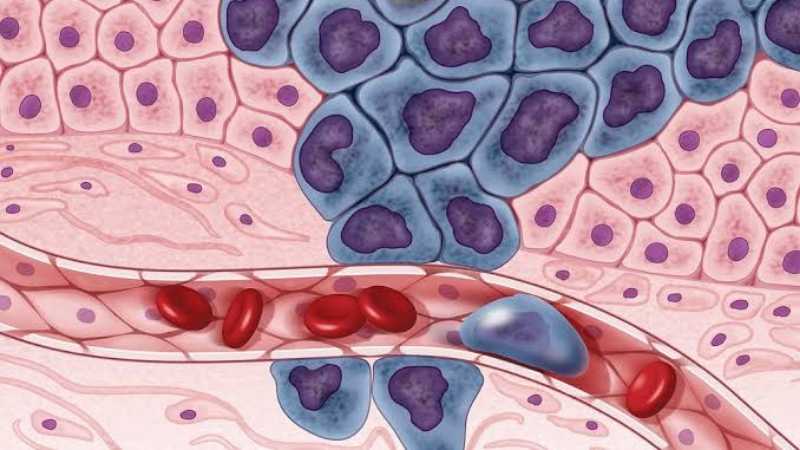
Blood is a fluid that is made up of:
- red blood cells (erythrocytes)
- white blood cells (leukocytes)
- platelets in a plasma
A healthy person has approximately 5 liters of blood.
Blood Types
At the beginning of the 20th century, Austrian scientist Karl Landsteiner noted that the red blood cells of some individuals were clumped by the serum from other individuals.
This led to his groundbreaking discovery of the ABO blood group system in 1900.
Red blood cells have the A antigen, B antigen, both, or neither:
| Blood Type | Antigens on Red Blood Cells | Antibodies in Plasma | Transfusion Notes |
|---|---|---|---|
| A | A antigen | Anti-B antibodies | Can receive A or O blood |
| B | B antigen | Anti-A antibodies | Can receive B or O blood |
| AB | A and B antigens | None | Universal recipient (can receive A, B, AB, or O) |
| O | None | Anti-A and Anti-B antibodies | Universal donor (can donate to all ABO types); can receive only O |
- Rh-positive individuals can receive Rh+ or Rh- blood
- Rh-negative individuals must receive Rh- blood
The 4 Blood Types match the 4 properties of waves.
| Blood Type | Wave Property |
|---|---|
| A | Density |
| B | Balance |
| AB | Spread |
| O | Commonality |
The Rh Factor: Positive or Negative
The presence of an antigen called the Rh protein or rhesus factor means the blood Rh positive.
- This was first discovered in Rhesus monkeys
- In our proposed Bio Superphysics, Rh+ means that the person is less capable of advanced ideas as the monkey propensity is stronger
Around 82% of people in the United States have Rh-positive blood, making Rh-negative blood relatively rare. This is why the human species is relativelty backward compared to advanced alien species like the Grays, Anunnaki, and Essassani.
This creates 8 main blood types:
- A+
- A-
- B+
- B-
- AB+
- AB-
- O+
- O-
Both ABO genes and Rh factors are passed down from parents, though due to the many possible combinations, you might not have the exact same blood type as either parent.
Why Blood Types Matter: Transfusion Safety
The immune system recognizes blood type markers (antigens) as either “self” or “foreign.”
Some antigens can trigger a patient’s immune system to attack the transfused blood.
- And so safe blood transfusions depend on careful blood typing and cross-matching.
If incompatible blood is transfused, the recipient’s antibodies immediately attack the foreign red blood cells, causing them to clump together.
The most common cause of death from a blood transfusion is a clerical error where an incompatible type of ABO blood is transfused.
Blood Type Distribution
O and A are the most common blood types. B- and AB- are the rarest.
US Blood Types
| Blood Type | Estimated % of U.S. population |
|---|---|
| O Positive | ~40% |
| A Positive | ~33% |
| B Positive | ~9% |
| AB Positive | ~4% |
| O Negative | ~6.7% |
| A Negative | ~5.9% |
| B Negative | ~2% |
| AB Negative | ~1% |
Japan Blood Types
| Blood Type | Estimated % of Japanese population |
|---|---|
| O Positive | ~29.9% |
| A Positive | ~39.8% |
| B Positive | ~19.9% |
| AB Positive | ~9.9% |
| O Negative | ~0.15% |
| A Negative | ~0.20% |
| B Negative | ~0.10% |
| AB Negative | ~0.05% |
By Country/Region
| Country/Region | O+ | O- | A+ | A- | B+ | B- | AB+ | AB- | Most Common | Notes |
|---|---|---|---|---|---|---|---|---|---|---|
| United States | 37.4% | 6.6% | 35.7% | 6.3% | 8.5% | 1.5% | 3.4% | 0.6% | O+, A+ | 44% O total, 42% A total |
| Peru | 70-71.4% | - | - | - | - | - | - | - | O+ | Indigenous populations |
| Ecuador | 75% | - | - | - | - | - | - | - | O+ | Highest O+ concentration |
| Denmark | ~30% | - | ~40% | - | - | - | - | - | A+ | Nordic pattern |
| Norway | ~30% | - | ~40% | - | - | - | - | - | A+ | Nordic pattern |
| Austria | ~30% | - | ~40% | - | - | - | - | - | A+ | Central European pattern |
| Ukraine | ~30% | - | ~40% | - | - | - | - | - | A+ | Eastern European pattern |
| India | - | - | - | - | 40% | - | - | - | B+ | Highest B concentration |
| Vietnam | - | - | - | - | 31% | - | - | - | B+ | Southeast Asian pattern |
| China | - | - | - | - | High | - | - | ~0% | B+ | Almost no Rh- types |
| Japan | - | - | - | - | - | - | - | ~0% | O+/A+ | Almost no Rh- types |
| Armenia | - | - | High | - | - | - | - | - | A+ | West Asian pattern |
| Azerbaijan | - | - | High | - | - | - | - | - | A+ | West Asian pattern |
| Ghana | High | Higher than AB+ | - | - | - | - | Lower | - | O+ | African pattern |
| Libya | High | Higher than AB+ | - | - | - | - | Lower | - | O+ | North African pattern |
| Egypt | High | Higher than AB+ | - | - | - | - | Lower | - | O+ | North African pattern |
| Zimbabwe | 63% | - | - | - | - | - | - | - | O+ | Southern African pattern |
| Lebanon | - | High | - | High | - | - | - | - | O+ | Only Middle East country with substantial O- and A- |
By Ethnic Group
| Ethnic Group | O+ | A+ | B+ | AB+ | Rh+ Rate | Notes |
|---|---|---|---|---|---|---|
| Latin Americans | 53% | - | - | - | ~95% | Highest O+ concentration |
| African Americans | 47% | - | - | - | 95% | High O+ concentration |
| Asians | 39% | - | High | - | 95-100% | Higher B+, almost no Rh- |
| Caucasians | 37% | High | - | - | 85% | More Rh- than other groups |
| African Blacks | High | - | - | - | ~100% | Virtually no Rh- |
Global Summary
| Blood Type | Global Percentage | Ranking | Notes |
|---|---|---|---|
| O+ | ~42% | Most common | Universal across all regions |
| A+ | ~35% | 2nd most common | Dominant in Europe |
| B+ | ~10% | 3rd most common | Highest in Asia & Middle East |
| O- | ~7% | 4th most common | Universal donor |
| A- | ~6% | 5th most common | Rare in Asia/Africa |
| AB+ | ~3% | 6th most common | Universal plasma donor |
| B- | ~2% | 7th most common | Very rare globally |
| AB- | <1% (0.6%) | Rarest | Rarest main blood type |
| Rh-null | <50 people worldwide | Ultra-rare | “Golden blood” |
Regional Patterns Summary
| Region | Dominant Type | Secondary Type | Rh- Frequency | Key Characteristics |
|---|---|---|---|---|
| South America | O+ (70-75%) | - | Low | Indigenous populations overwhelmingly type O |
| North America | O+ (37%) | A+ (36%) | Moderate (~7%) | Fairly balanced O and A |
| Europe | A+ (40%) | O+ (30%) | Highest (~15%) | Only region where A dominates |
| South Asia | B+ (40%) | O+ | Very low (<1%) | Highest B concentration globally |
| East Asia | O+/A+ | B+ | Almost 0% | Virtually no Rh- types |
| Middle East | B+ | O+ (41%) | Low | Highest B frequency, Lebanon exception for Rh- |
| Africa | O+ (60%+) | A+ | Almost 0% | Virtually no Rh- in sub-Saharan Africa |
| Oceania | O+ | A+ | Low | Similar to Americas pattern |
Key Insights
- O+ is universal: Most common blood type on every continent
- Europe is unique: Only region where A+ rivals or exceeds O+
- B+ concentration: Highest in Asia (India, China) and Middle East
- Rh- is rare: Only 7% globally, concentrated in Caucasian populations
- Indigenous patterns: Native populations (Americas, Africa) show strong O+ dominance
- East Asian uniqueness: Almost complete absence of Rh- blood types