Against the Stoics
Table of Contents
- You want to LIVE “according to Nature”?
You noble Stoics, what fraud of words!
You imagine Nature to be:
- boundlessly extravagant
- boundlessly indifferent
- without purpose or consideration
- without pity or justice
- both fruitful and barren and uncertain
how COULD you live with such indifference?
To live—is not that just endeavouring to be otherwise than this Nature?
Is not living valuing, preferring, being unjust, being limited, endeavouring to be different?
You say, “live according to Nature.” But this means actually: “live according to life”
How could you do DIFFERENTLY?
Why should you make a principle out of what you yourselves are, and must be?
In reality, however, it is quite otherwise with you.
You pretend to read with rapture the canon of your law in Nature. But you want something quite the contrary, you self-deluders!
In your pride, you wish to dictate your morals and ideals to Nature herself, and for her to incorporate them.
You insist that it shall be Nature “according to the Stoa.”
You would like everything to be made after your own image, as a vast, eternal glorification and generalism of Stoicism!
Stoicism is self-tyranny.
Nature will also allow herself to be tyrannized over: is not the Stoic a PART of Nature?
- The eagerness, subtlety, and craftiness, with which the problem of “the real and the apparent world” is dealt with at present throughout Europe, furnishes food for thought and attention.
He who hears only a “Will to Truth” in the background, and nothing else, cannot certainly boast of the sharpest ears.
In rare and isolated cases, it may really have happened that such a Will to Truth—a certain extravagant and adventurous pluck, a metaphysician’s ambition of the forlorn hope—has participated therein: that which in the end always prefers a handful of “certainty” to a whole cartload of beautiful possibilities;
There may even be puritanical fanatics of conscience, who prefer to put their last trust in a sure nothing, rather than in an uncertain something.
But that is Nihilism, and the sign of a despairing, mortally wearied soul, notwithstanding the courageous bearing such a virtue may display.
It seems, however, to be otherwise with stronger and livelier thinkers who are still eager for life.
In that they side AGAINST appearance, and speak superciliously of “perspective,” in that they rank the credibility of their own bodies about as low as the credibility of the ocular evidence that “the earth stands still,” thus, apparently, allowing with complacency their securest possession to escape (for what does one at present believe in more firmly than in one’s body?),—who knows if they are not really trying to win back something which was formerly an even securer possession, something of the old domain of the faith of former times, perhaps the “immortal soul,” perhaps “the old God,” in short, ideas by which they could live better, that is to say, more vigorously and more joyously, than by “modern ideas”?
There is DISTRUST of these modern ideas in this mode of looking at things.
There is a disbelief in all that has been constructed yesterday and today; there is perhaps some slight admixture of satiety and scorn, which can no longer endure the BRIC-A-BRAC of ideas of the most varied origin, such as so-called Positivism at present throws on the market; a disgust of the more refined taste at the village-fair motleyness and patchiness of all these reality-philosophasters, in whom there is nothing either new or true, except this motleyness.
We should agree with those skeptical anti-realists and knowledge-microscopists of the present day.
Their instinct repels them from MODERN reality and is unrefuted…
They wish to go “back.”
But their main thing is that they wish to get AWAY.
A little MORE strength, swing, courage, and artistic power, and they would be OFF—and not back!
- There is everywhere an attempt at present to:
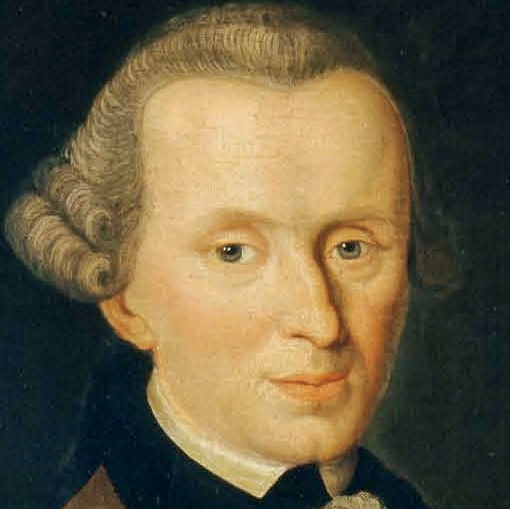
- divert attention from the actual influence which Kant exercised on German philosophy,
- especially ignore the value which Kant set on himself.
Kant was first and foremost proud of his Table of Categories.
This is the most difficult thing that could ever be undertaken on behalf of metaphysics.
Let us only understand this “could be”! He was proud of having DISCOVERED a new faculty in man, the faculty of synthetic judgment a priori.
He deceived himself in this matter.
The development and rapid flourishing of German philosophy depended nevertheless on his pride, and on the eager rivalry of the younger generation to discover if possible something—at all events “new faculties”—of which to be still prouder!
Synthetic judgments a priori are POSSIBLE BY MEANS OF A MEANS (faculty)
But unfortunately not in five words, but so circumstantially, imposingly, and with such display of German profundity and verbal flourishes, that one altogether loses sight of the comical niaiserie allemande involved in such an answer.
People were beside themselves with delight over this new faculty, and the jubilation reached its climax when Kant further discovered a moral faculty in man—for at that time Germans were still moral, not yet dabbling in the “Politics of hard fact.”
Then came the honeymoon of German philosophy. All the young theologians of the Tubingen institution went immediately into the groves—all seeking for “faculties.”
And what did they not find—in that innocent, rich, and still youthful period of the German spirit, to which Romanticism, the malicious fairy, piped and sang, when one could not yet distinguish between “finding” and “inventing”!
Above all a faculty for the “transcendental”; Schelling christened it, intellectual intuition, and thereby gratified the most earnest longings of the naturally pious-inclined Germans.
One can do no greater wrong to the whole of this exuberant and eccentric movement (which was really youthfulness, notwithstanding that it disguised itself so boldly, in hoary and senile conceptions), than to take it seriously, or even treat it with moral indignation. Enough, however—the world grew older, and the dream vanished.
A time came when people rubbed their foreheads, and they still rub them today. People had been dreaming, and first and foremost—old Kant.
“By means of a means (faculty)"—he had said, or at least meant to say. But, is that—an answer? An explanation?
Or is it not rather merely a repetition of the question? How does opium induce sleep? “By means of a means (faculty),” namely the virtus dormitiva, replies the doctor in Moliere,
Quia est in eo virtus dormitiva,
Cujus est natura sensus assoupire.
We should replace the Kantian question, “How are synthetic judgments a PRIORI possible?” by another question, “Why is belief in such judgments necessary?”
We should understand that such judgments must be believed to be true, for the sake of the preservation of creatures like ourselves; though they still might naturally be false judgments!
Or, more plainly spoken, and roughly and readily—synthetic judgments a priori should not “be possible” at all;
We have no right to them; in our mouths they are nothing but false judgments. Only, of course, the belief in their truth is necessary, as plausible belief and ocular evidence belonging to the perspective view of life.
Finally, to call to mind the enormous influence which “German philosophy”—I hope you understand its right to inverted commas (goosefeet)?—has exercised throughout the whole of Europe, there is no doubt that a certain VIRTUS DORMITIVA had a share in it;
Thanks to German philosophy, it was a delight to the noble idlers, the virtuous, the mystics, the artiste, the 3/4 Christians, and the political obscurantists of all nations, to find an antidote to the still overwhelming sensualism which overflowed from the last century into this, in short—“sensus assoupire.”
- Materialistic atomism is one of the best-refuted theories that have been advanced.
In Europe, Pole Boscovich and the Pole Copernicus have hitherto been the greatest and most successful opponents of ocular evidence.
Copernicus has persuaded us to believe, contrary to all the senses, that the earth does NOT stand fast.
Boscovich has taught us to abjure the belief in the last thing that “stood fast” of the earth—the belief in “substance,” in “matter,” in the earth-residuum, and particle-atom.
It is the greatest triumph over the senses that has hitherto been gained on earth.
We must declare relentless war to the knife against the “atomistic requirements” which are dangerous like the more celebrated “metaphysical requirements”.
We must above all end SOUL-ATOMISM.
- This is the other and more portentous atomism which Christianity has taught best and longest.
It says that the soul is something indestructible, eternal, indivisible, as a monad, as an atomon.
This belief should be expelled from science!
It is not at all necessary to get rid of “the soul” thereby, and thus renounce one of the oldest and most venerated hypotheses—as happens frequently to the clumsiness of naturalists, who can hardly touch on the soul without immediately losing it.
But the way is open for new acceptations and refinements of the soul-hypothesis; and such conceptions as “mortal soul,” and “soul of subjective multiplicity,” and “soul as social structure of the instincts and passions,” want henceforth to have legitimate rights in science.
In that the NEW psychologist is about to put an end to the superstitions which have hitherto flourished with almost tropical luxuriance around the idea of the soul, he is really, as it were, thrusting himself into a new desert and a new distrust—it is possible that the older psychologists had a merrier and more comfortable time of it; eventually, however, he finds that precisely thereby he is also condemned to INVENT—and, who knows? perhaps to DISCOVER the new.