
Menu
Table of Contents
The 5 Greek Elements emanate from the Supreme Entity. This means that they have a hierarchy:
- The elements that are closer in quality to the Supreme are superior
- The elements that are farther in quality are inferior
We will use the word “layer” to denote this natural hierarchy.
- Layer 5 or the 5th Element is superior
- Layer 1 or the 1st Element is inferior
An analogy is a Photoshop image which is made up layers that are on top of each other that creates a full picture.
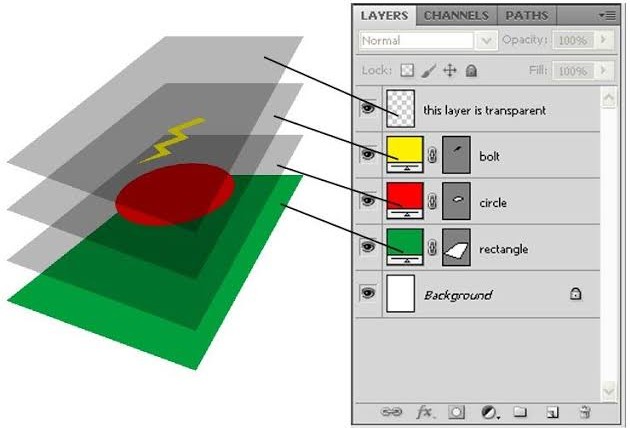
The layers in Photoshop have a hierarchy where one layer is on top of, or covers the ones below it.
Similarly, the 5 layers of Existence have a hierarchy wherein the highest aethereal layer covers all. This makes matter the most inferior layer.
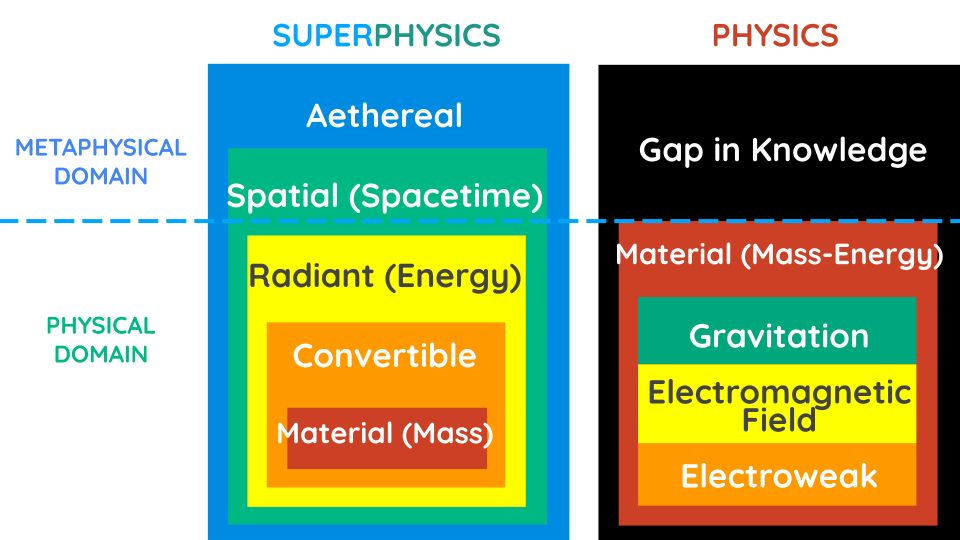
For example, Modern Physics tells us that:
- gravity can affect light, but light cannot affect gravity
- electromagnetism can affect iron, but ordinary iron does not exert electromagnetism
- a mass of iron can exert a small amount of gravity, but not enough to affect light
This exposes a natural hierarchy, wherein:
- gravity is superior to light (electromagnetism)
- electromagnetism is superior to matter (strong force)
- dark energy as the atomic space (which we call the aetherspace) is superior to gravity
Since there are 3 domains of phenomena as material, biological, and mental, we can apply the 5 layers on each domain in order to create 15 layers.
The 5 Main Mental Layers
The higher and lower minds are part of the main mental layers that are above the physical ones.
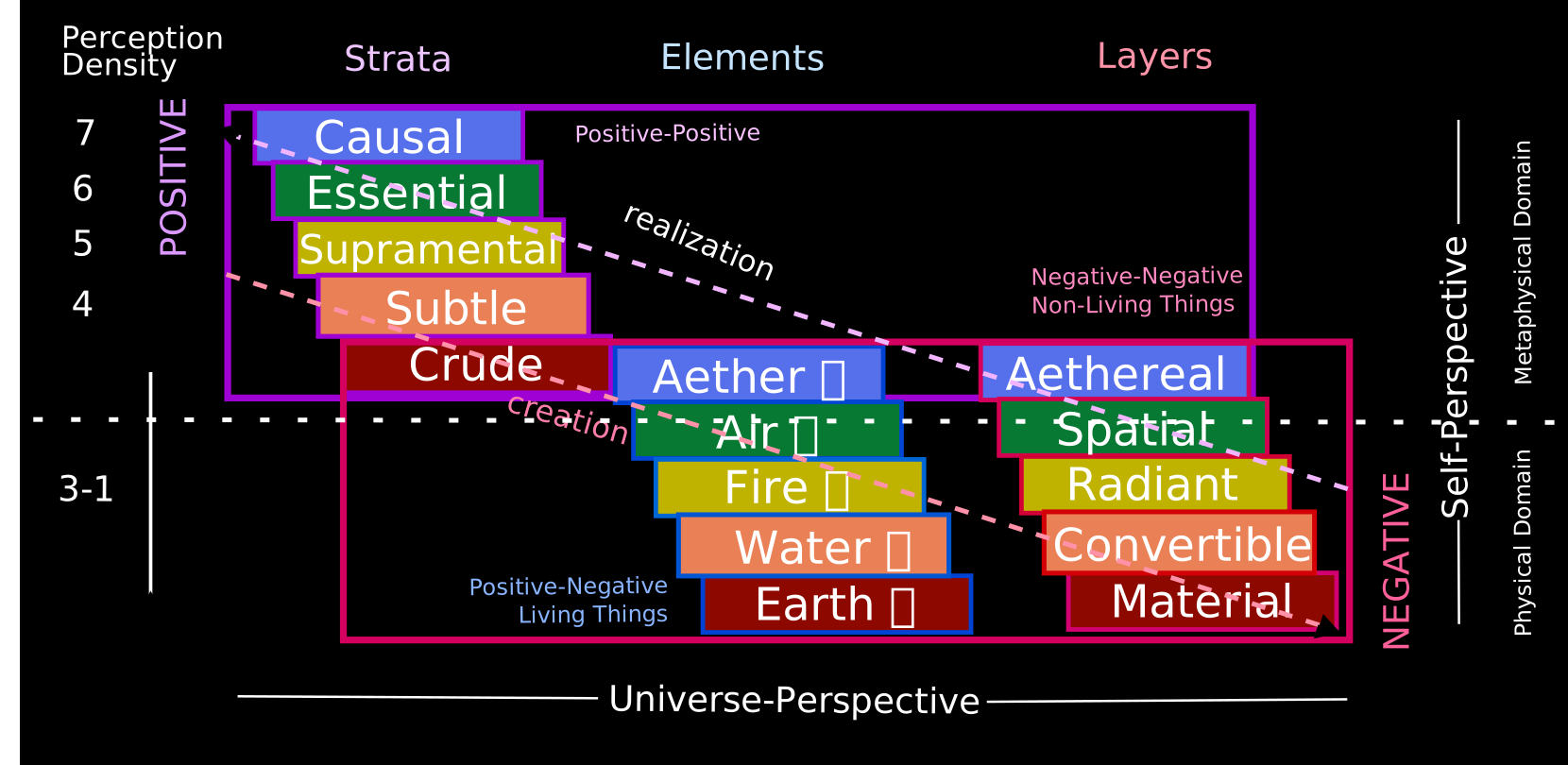
We can discard the names of Air, Fire, Water, Earth in the metaphysical domain as those names denote physical phenomena.
Instead, we use the abstract descriptive names as follows:
| Stratum | Sanskrit Equivalent | Sassani Equivalent |
|---|---|---|
| Causal | Hiranmaya | Oversoul (7th density) |
| Essential | Vijinanamaya | Soul |
| Supramental | Atimanasa | Higher Mind |
| Subtle | Manomaya | Template Reality |
| Crude | Kamamaya | Collective Automatic Mind |
The 5 Biophysical Layers
Below the aethereal layers are the 5 Biophysical layers which are in-between the metaphysical and physical. These keep the ancient Greek names of Aether, Air, Fire, Water, Earth since they were used in ancient medicine which Superphysics can connect to.
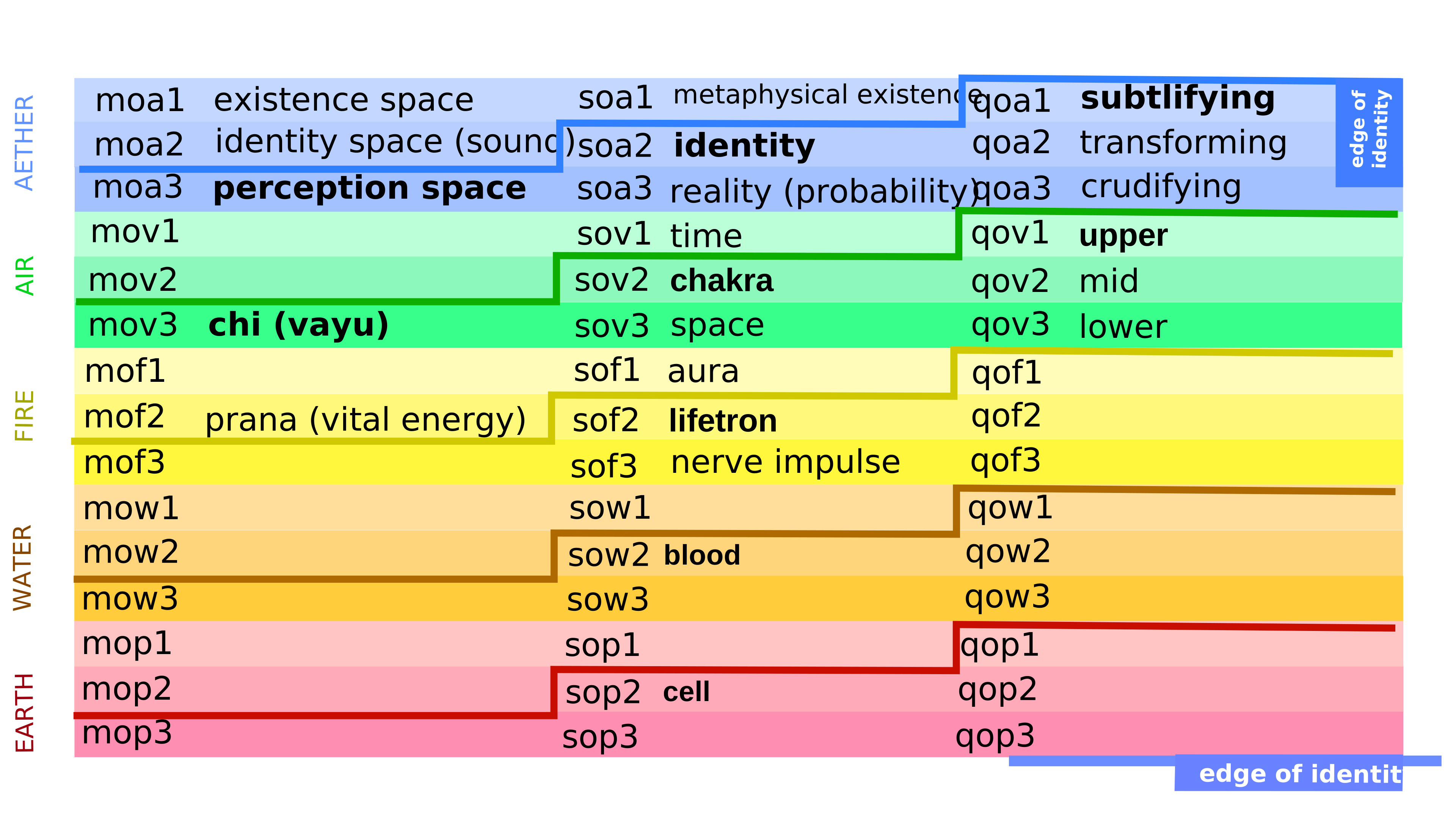
| Rank | Name | Purpose |
|---|---|---|
| 1 | Aether | Soul and mind |
| 2 | Air | |
| 3 | Fire | |
| 4 | Water | |
| 5 | Earth |
The 5 Material Layers
These are already known to Physics.
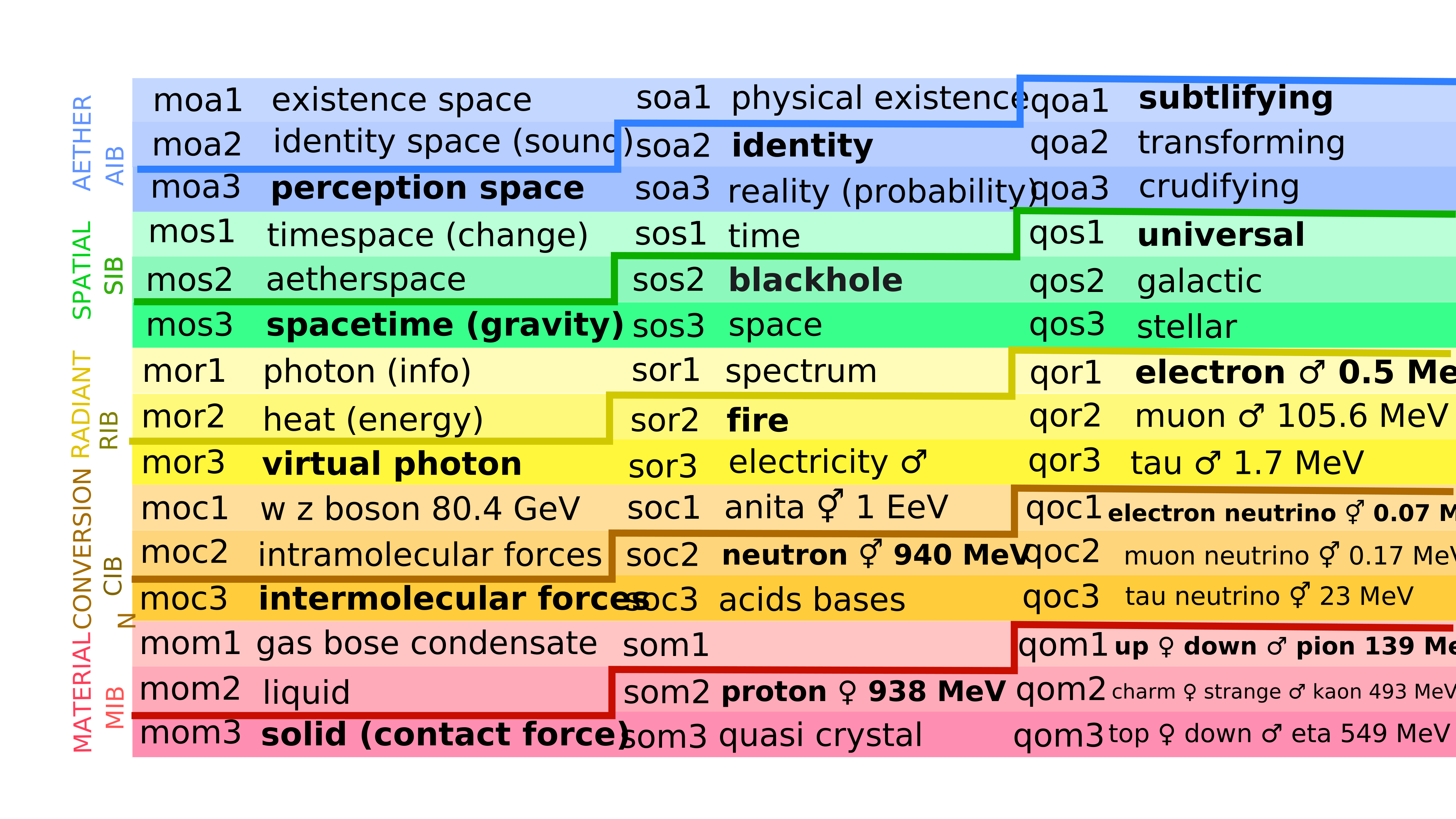
| Rank | Name | Physics Name |
|---|---|---|
| 1 | Aethereal | Observer |
| 2 | Spatial | Spacetime |
| 3 | Radiant | Electromagnetism |
| 4 | Convertible | Weak Force |
| 5 | Material | Strong Force |
Leave a Comment
Thank you for your comment!
It will appear after review.