Part 1

The Action of Naming

70 min read
Table of Contents

PERSONS OF THE DIALOGUE: Socrates, Hermogenes, Cratylus.

Hermogenes

Socrates, our friend Cratylus has been arguing about names; he says that they are natural and not conventional; not a portion of the human voice which men agree to use; but that there is a truth or correctness in them, which is the same for Hellenes as for barbarians. Whereupon I ask him, whether his own name of Cratylus is a true name or not, and he answers “Yes.”

And Socrates? “Yes.” Then every man’s name, as I tell him, is that which he is called. To this he replies—“If all the world were to call you Hermogenes, that would not be your name.” And when I am anxious to have a further explanation he is ironical and mysterious, and seems to imply that he has a notion of his own about the matter, if he would only tell, and could entirely convince me, if he chose to be intelligible. Tell me, Socrates, what this oracle means; or rather tell me, if you will be so good, what is your own view of the truth or correctness of names, which I would far sooner hear.
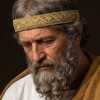
Hermogenes
Socrates
Socrates
Son of Hipponicus, there is an ancient saying, that “hard is the knowledge of the good.” And the knowledge of names is a great part of knowledge. If I had not been poor, I might have heard the fifty-drachma course of the great Prodicus, which is a complete education in grammar and language—these are his own words—and then I should have been at once able to answer your question about the correctness of names. But, indeed, I have only heard the single-drachma course, and therefore, I do not know the truth about such matters; I will, however, gladly assist you and Cratylus in the investigation of them. When he declares that your name is not really Hermogenes, I suspect that he is only making fun of you;—he means to say that you are no true son of Hermes, because you are always looking after a fortune and never in luck. But, as I was saying, there is a good deal of difficulty in this sort of knowledge, and therefore we had better leave the question open until we have heard both sides.
Hermogenes
I have often talked over this matter, both with Cratylus and others, and cannot convince myself that there is any principle of correctness in names other than convention and agreement; any name which you give, in my opinion, is the right one, and if you change that and give another, the new name is as correct as the old—we frequently change the names of our slaves, and the newly-imposed name is as good as the old: for there is no name given to anything by nature; all is convention and habit of the users;—such is my view. But if I am mistaken I shall be happy to hear and learn of Cratylus, or of any one else.
Hermogenes
Socrates
Socrates
I dare say that you may be right, Hermogenes: let us see;—Your meaning is, that the name of each thing is only that which anybody agrees to call it?
Hermogenes
That is my notion.
Hermogenes
Socrates
Socrates
Whether the giver of the name be an individual or a city?
Hermogenes
Yes.
Hermogenes
Socrates
Socrates
Well, now, let me take an instance;—suppose that I call a man a horse or a horse a man, you mean to say that a man will be rightly called a horse by me individually, and rightly called a man by the rest of the world; and a horse again would be rightly called a man by me and a horse by the world:—that is your meaning?
Hermogenes
He would, according to my view.
Hermogenes
Socrates
Socrates

But how about truth? You acknowledge that:

  • there is in words a true and a false.
  • there are true and false propositions
  • a true proposition says that which is, and a false proposition says that which is not
  • therefore in a proposition there is a true and false
Socrates
Socrates
But is a proposition true as a whole only, and are the parts untrue?
Hermogenes
No; the parts are true as well as the whole.
Hermogenes
Socrates
Socrates
Would you say the large parts and not the smaller ones, or every part?
Hermogenes
I should say that every part is true.
Hermogenes
Socrates
Socrates
Is a proposition resolvable into any part smaller than a name?
Hermogenes
No; that is the smallest.
Hermogenes
Socrates
Socrates
Then the name is a part of the true proposition?
Hermogenes
Yes.
Hermogenes
Socrates
Socrates

Yes, and a true part. The part of a falsehood also a falsehood.

Then, if propositions may be true and false then:

  • names may be true and false
  • the name of anything is that which any one affirms to be the name
Socrates
Socrates
And will there be so many names of each thing as everybody says that there are? and will they be true names at the time of uttering them?
Hermogenes
Yes, Socrates, I can conceive no correctness of names other than this; you give one name, and I another; and in different cities and countries there are different names for the same things; Hellenes differ from barbarians in their use of names, and the several Hellenic tribes from one another.
Hermogenes
Socrates
Socrates
But would you say, Hermogenes, that the things differ as the names differ? and are they relative to individuals, as Protagoras tells us? For he says that man is the measure of all things, and that things are to me as they appear to me, and that they are to you as they appear to you. Do you agree with him, or would you say that things have a permanent essence of their own?
Hermogenes
There have been times, Socrates, when I have been driven in my perplexity to take refuge with Protagoras; not that I agree with him at all.
Hermogenes
Socrates
Socrates
What! have you ever been driven to admit that there was no such thing as a bad man?
Hermogenes
No, indeed; but I have often had reason to think that there are very bad men, and a good many of them.
Hermogenes
Socrates
Socrates
Well, and have you ever found any very good ones?
Hermogenes
Not many.
Hermogenes
Socrates
Socrates
Still you have found them?
Hermogenes
Yes.
Hermogenes
Socrates
Socrates
And would you hold that the very good were the very wise, and the very evil very foolish? Would that be your view?
Hermogenes
It would.
Hermogenes
Socrates
Socrates
But if Protagoras is right, and the truth is that things are as they appear to any one, how can some of us be wise and some of us foolish?
Hermogenes
Impossible.
Hermogenes
Socrates
Socrates
And if, on the other hand, wisdom and folly are really distinguishable, you will allow, I think, that the assertion of Protagoras can hardly be correct. For if what appears to each man is true to him, one man cannot in reality be wiser than another.
Hermogenes
He cannot.
Hermogenes
Socrates
Socrates
Nor will you be disposed to say with Euthydemus, that all things equally belong to all men at the same moment and always; for neither on his view can there be some good and others bad, if virtue and vice are always equally to be attributed to all.
Hermogenes
There cannot.
Hermogenes
Socrates
Socrates
But if neither is right, and things are not relative to individuals, and all things do not equally belong to all at the same moment and always, they must be supposed to have their own proper and permanent essence: they are not in relation to us, or influenced by us, fluctuating according to our fancy, but they are independent, and maintain to their own essence the relation prescribed by nature.
Hermogenes
I think, Socrates, that you have said the truth.
Hermogenes
Socrates
Socrates
Does what I am saying apply only to the things themselves, or equally to the actions which proceed from them? Are not actions also a class of being?
Hermogenes
Yes, the actions are real as well as the things.
Hermogenes
Socrates
Socrates
Then the actions also are done according to their proper nature, and not according to our opinion of them? In cutting, for example, we do not cut as we please, and with any chance instrument; but we cut with the proper instrument only, and according to the natural process of cutting; and the natural process is right and will succeed, but any other will fail and be of no use at all.
Hermogenes
I should say that the natural way is the right way.
Hermogenes
Socrates
Socrates

Again, in burning, not every way is the right way; but the right way is the natural way, and the right instrument the natural instrument. This holds good of all actions.

Speech is a kind of action.

And will a man speak correctly who speaks as he pleases? Will not the successful speaker rather be he who speaks in the natural way of speaking, and as things ought to be spoken, and with the natural instrument? Any other mode of speaking will result in error and failure.

Socrates
Socrates

And is not naming a part of speaking? for in giving names men speak.

And if speaking is a sort of action and has a relation to acts, then naming is also a sort of action.

We saw that actions were not relative to ourselves, but had a special nature of their own.

Then the argument would lead us to infer that names ought to be given according to a natural process, and with a proper instrument, and not at our pleasure: in this and no other way shall we name with success.

Socrates
Socrates

But again, that which has to be cut has to be cut with something. And that which has to be woven or pierced has to be woven or pierced with something.

And that which has to be named has to be named with something.

Socrates
Socrates
What is that with which we pierce?
Hermogenes
An awl.
Hermogenes
Socrates
Socrates
And with which we weave?
Hermogenes
A shuttle.
Hermogenes
Socrates
Socrates
And with which we name?
Hermogenes
A name.
Hermogenes
Socrates
Socrates
Very good: then a name is an instrument?
Hermogenes
Certainly.
Hermogenes
Socrates
Socrates
Suppose that I ask, “What sort of instrument is a shuttle?” And you answer, “A weaving instrument.”
Hermogenes
Well.
Hermogenes
Socrates
Socrates
And I ask again, “What do we do when we weave?”—The answer is, that we separate or disengage the warp from the woof.
Hermogenes
Very true.
Hermogenes
Socrates
Socrates
And may not a similar description be given of an awl, and of instruments in general?
Hermogenes
To be sure.
Hermogenes
Socrates
Socrates
And now suppose that I ask a similar question about names: will you answer me? Regarding the name as an instrument, what do we do when we name?
Hermogenes
I cannot say.
Hermogenes
Socrates
Socrates
Do we not give information to one another, and distinguish things according to their natures?
Hermogenes
Certainly we do.
Hermogenes
Socrates
Socrates
Then a name is an instrument of teaching and of distinguishing natures, as the shuttle is of distinguishing the threads of the web.
Hermogenes
Yes.
Hermogenes
Socrates
Socrates
And the shuttle is the instrument of the weaver?
Hermogenes
Assuredly.
Hermogenes
Socrates
Socrates
Then the weaver will use the shuttle well—and well means like a weaver? and the teacher will use the name well—and well means like a teacher?
Hermogenes
Yes.
Hermogenes
Socrates
Socrates
And when the weaver uses the shuttle, whose work will he be using well?
Hermogenes
That of the carpenter.
Hermogenes
Socrates
Socrates
And is every man a carpenter, or the skilled only?
Hermogenes
Only the skilled.
Hermogenes
Socrates
Socrates
And when the piercer uses the awl, whose work will he be using well?
Hermogenes
That of the smith.
Hermogenes
Socrates
Socrates
And is every man a smith, or only the skilled?
Hermogenes
The skilled only.
Hermogenes
Socrates
Socrates
And when the teacher uses the name, whose work will he be using?
Hermogenes
There again I am puzzled.
Hermogenes
Socrates
Socrates
Cannot you at least say who gives us the names which we use?
Hermogenes
Indeed I cannot.
Hermogenes
Socrates
Socrates
Does not the law seem to you to give us them?
Hermogenes
Yes, I suppose so.
Hermogenes
Socrates
Socrates
Then the teacher, when he gives us a name, uses the work of the legislator?
Hermogenes
I agree.
Hermogenes
Socrates
Socrates
And is every man a legislator, or the skilled only?
Hermogenes
The skilled only.
Hermogenes
Socrates
Socrates
Then, Hermogenes, not every man is able to give a name, but only a maker of names; and this is the legislator, who of all skilled artisans in the world is the rarest.
Hermogenes
True.
Hermogenes

Leave a Comment