
Menu
Table of Contents
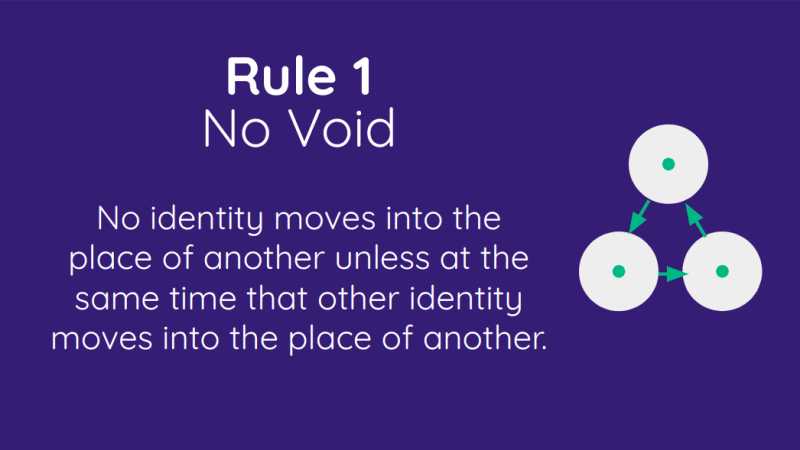
The 1st Rule says:
No identity moves into the place of another identity unless at the same time that other identity moves into the place of another identity.
We call this the no void rule.
This is most obvious in liquid dynamics and aerodynamics.
| Symbol | Meaning |
|---|---|
| position of identity (physical location, or metaphysical “place” — a market position, a social role, a country’s status) | |
| the change in position of identity (how far and which way it moved) | |
| index labeling which identity — identity 1, identity 2, identity 3… | |
| “sum over all ” — add up the displacement of every identity in the system | |
| the total adds up to zero — net displacement across the whole system is nothing; every move out is matched by a move in |
Equation Meaning: add up how far every identity moved, and it must total zero — nothing moves without something else moving to fill its place.
The 1st rule is one of the 2 movements described by Timeaus:
Of the heavenly, God gave to each of them 2 movements:
- A movement on the same spot after the same manner, whereby they ever continue to think consistently the same thoughts about the same things
- A forward movement in which they are controlled by the revolution of the Same and the like; but by the other 5 motions they were unaffected, in order that each of them might attain the highest perfection.

Timaeus
Timeaus by Plato
Leave a Comment
Thank you for your comment!
It will appear after review.